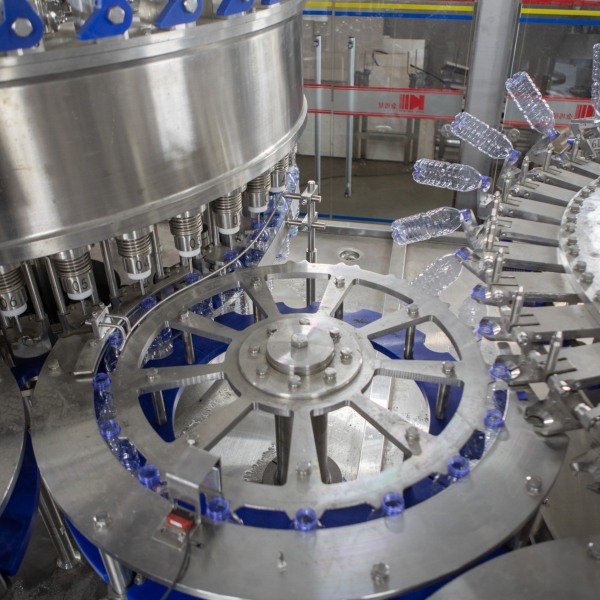
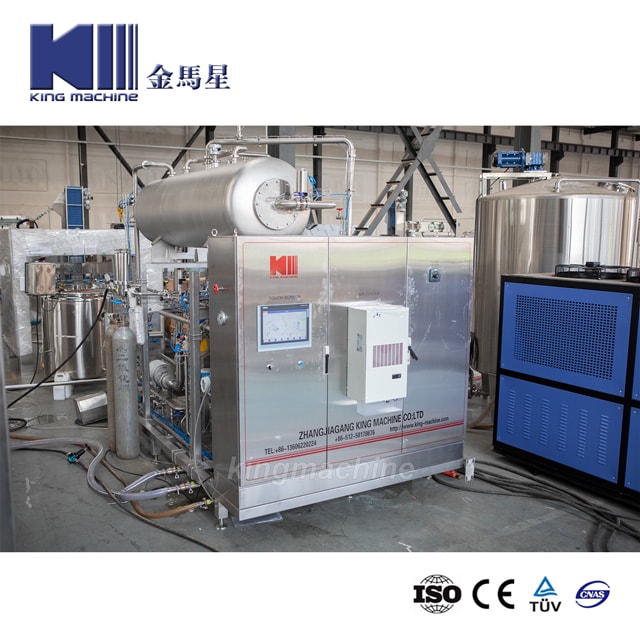
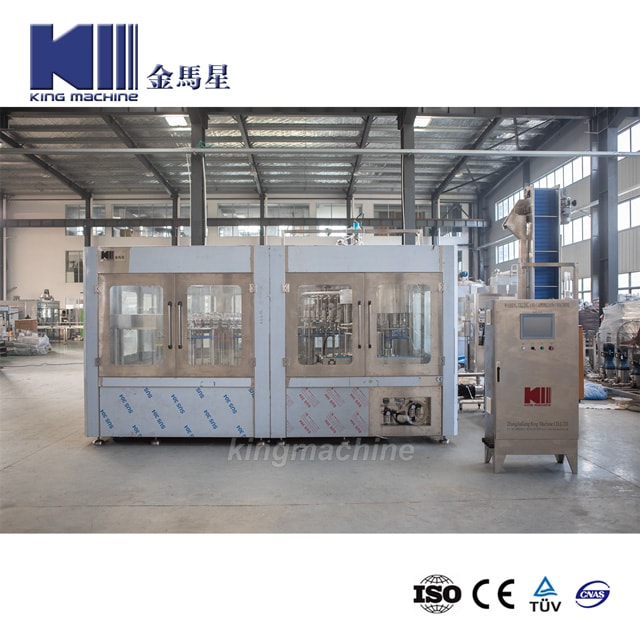
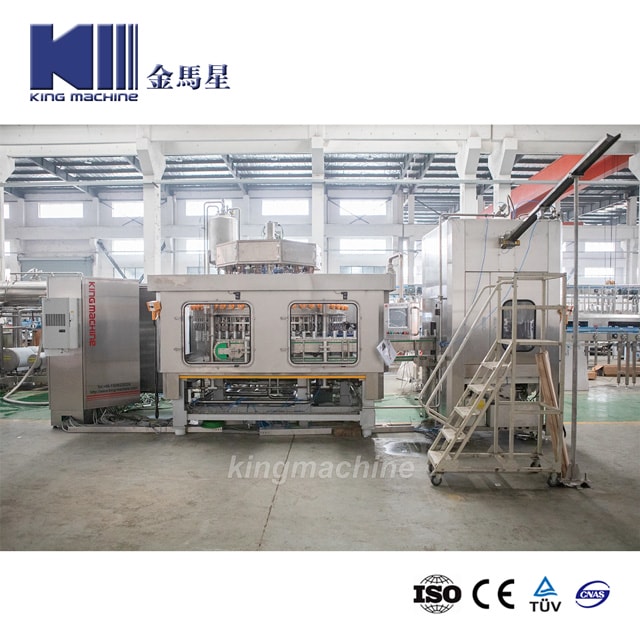
Les machines de remplissage de bouteilles sont des éléments essentiels de toute ligne d'embouteillage d'eau moderne, influençant directement la précision du remplissage, l'efficacité de la production et les coûts d'exploitation à long terme. Dans la production d'eau en bouteille, deux technologies couramment utilisées sont les remplisseuses par gravité et les remplisseuses par gravité. machine de remplissage de débitmètres.
Bien que les deux solutions soient largement utilisées pour le remplissage d'eau, elles diffèrent considérablement en termes de méthodes de contrôle des procédés, de précision et d'adéquation aux différentes échelles de production. Le choix de la technologie de remplissage appropriée est essentiel pour améliorer la stabilité de la production et optimiser le retour sur investissement.
Cet article compare ces deux méthodes de remplissage afin d'aider les fabricants à identifier la solution la plus adaptée à leur ligne d'embouteillage d'eau.
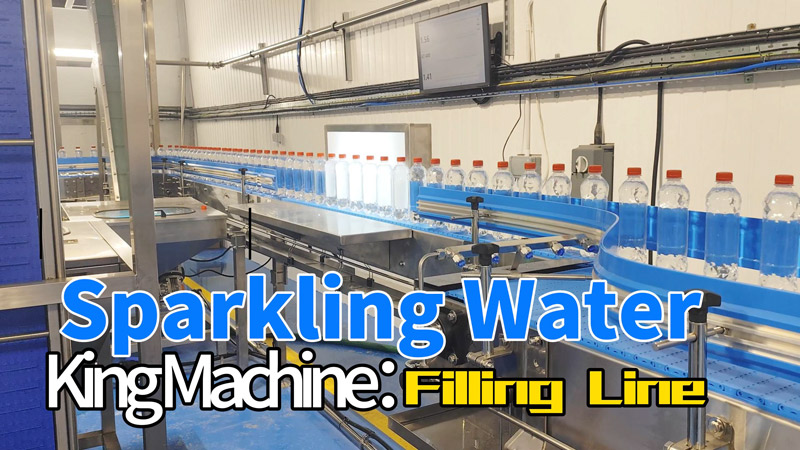
1. Qu'est-ce qu'une machine de remplissage par gravité ?
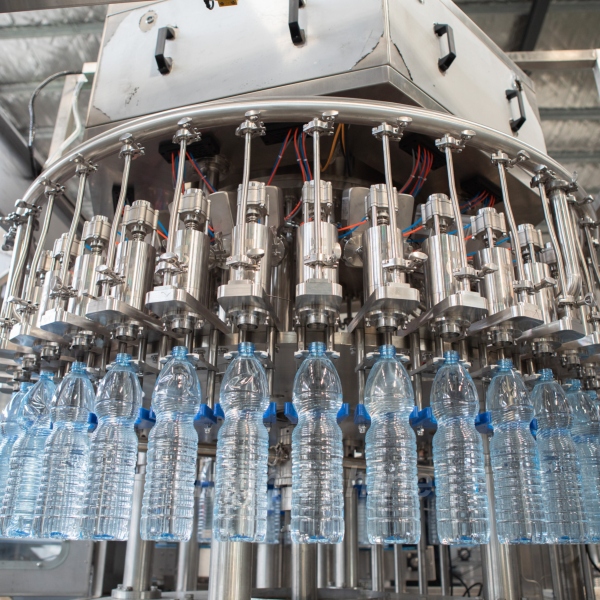
Une remplisseuse par gravité est un équipement qui utilise l'écoulement naturel du liquide pour remplir les bouteilles. Elle est couramment utilisée dans la production standard d'eau en bouteille, où la rentabilité prime sur la précision.
Principe de fonctionnement : L'eau est stockée dans un réservoir tampon et s'écoule dans les bouteilles par gravité grâce à des valves de remplissage. Aucune pression extérieure n'est requise, ce qui rend le processus simple et stable.
Principales caractéristiques : Structure simple, faible coût d'investissement et maintenance aisée. Elle requiert une formation minimale des opérateurs et offre des performances stables pour les besoins de production de base.
Applications typiques : Convient pour l'eau plate potable, l'eau en bouteille standard et les lignes de remplissage à vitesse moyenne à basse.
2. Qu'est-ce qu'une machine de remplissage à débitmètre ?
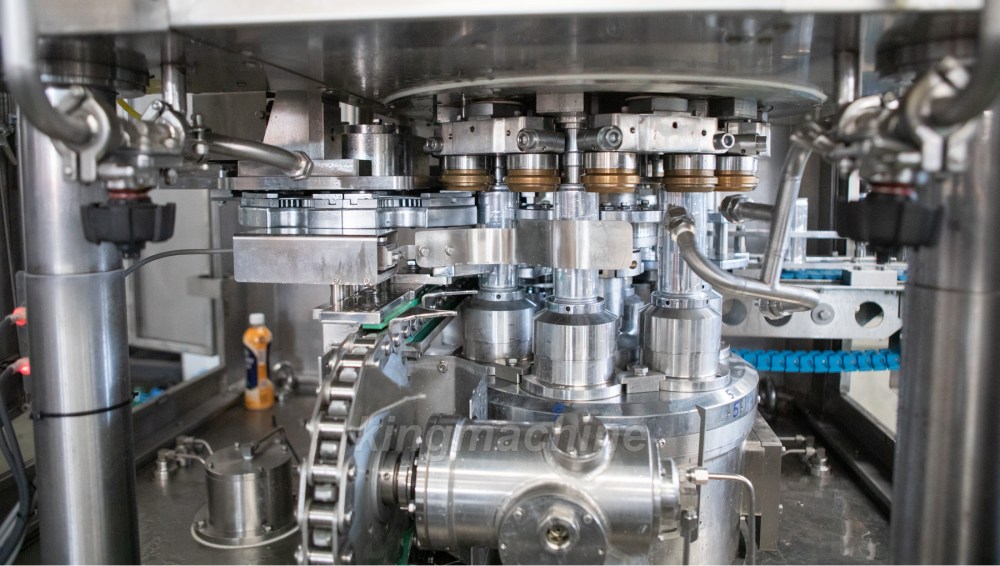
A machine de remplissage à débitmètre Il s'agit d'un équipement de remplissage d'eau de pointe qui utilise une technologie de mesure précise pour contrôler le volume de remplissage. Il est largement utilisé dans les usines d'embouteillage modernes qui exigent une grande précision et une automatisation poussée.
Principe de fonctionnement : Les remplisseuses à débitmètre utilisent des débitmètres électromagnétiques ou massiques pour mesurer et contrôler le volume exact de liquide. Le remplissage de chaque bouteille est effectué en fonction de la mesure du débit en temps réel et non du niveau de liquide.
Principales caractéristiques : Haute précision de remplissage, performances stables et haut niveau d'automatisation. Elle garantit des résultats de remplissage constants et réduit le gaspillage de produit.
Applications typiques : Convient aux eaux en bouteille haut de gamme, aux produits d'eau fonctionnelle et aux lignes de remplissage automatisées à grande vitesse.
3. Remplissage par gravité vs remplissage par débitmètre
Les remplisseuses par gravité et les remplisseuses à débitmètre diffèrent principalement par leur méthode de contrôle, leur niveau de précision et leurs capacités globales. Le tableau comparatif ci-dessous met en évidence leurs principales différences en situation de production.
Produit | Machine de remplissage par gravité | Machine de remplissage de débitmètre |
Précision de remplissage | Coût en adjuvantation plus élevé. | Meilleure performance du béton |
Coût de l'équipement | Coût en adjuvantation plus élevé. | Meilleure performance du béton |
Vitesse de production | Moyenne | Haute |
Entretien | Simple | Plus complexe |
Contrôle de l'hygiène | Standard | Rapidité |
Niveau d'automatisation | Fonction Plug & Play | Avancé |
Le remplissage par gravité privilégie les coûts grâce à une structure mécanique plus simple, tandis que le remplissage par débitmètre met l'accent sur une précision et une automatisation accrues. Les systèmes par gravité conviennent à la production standard, tandis que les systèmes par débitmètre sont plus adaptés aux applications automatisées haut de gamme. Chaque type de machine de remplissage répond à des stratégies de production différentes.
4. Quelle machine de remplissage est la meilleure pour l'embouteillage d'eau ?
Quand choisir une machine de remplissage par gravité
Les remplisseuses par gravité conviennent aux fabricants disposant de budgets d'investissement limités, à la production standard d'eau en bouteille et aux usines de traitement d'eau de petite et moyenne taille. Elles constituent un choix pratique pour des opérations stables et rentables où une cadence de production élevée et un remplissage ultra-précis ne sont pas des exigences essentielles.
Quand choisir une machine de remplissage de débitmètre
Machine de remplissage de débitmètreCes systèmes sont idéaux pour les marques d'eau en bouteille haut de gamme, les lignes de production à grande échelle et les applications exigeant une grande précision de remplissage et une automatisation avancée. Ils conviennent mieux aux fabricants soucieux de la constance de la qualité de leurs produits, d'une efficacité accrue et d'une stabilité de production à long terme.
5. Guide de sélection des installations de remplissage d'eau
Capacité de production
Les petites installations privilégient généralement des solutions de remplissage économiques, plus simples et nécessitant un investissement moindre, ce qui les rend adaptées aux phases initiales ou à une production limitée. En revanche, les grandes installations requièrent des systèmes de remplissage à haut rendement capables de fonctionner en continu, d'assurer une production plus importante et une performance stable sur le long terme.
Positionnement du produit
Pour la production d'eau potable standard, les remplisseuses par gravité sont couramment utilisées en raison de leur coût avantageux et de leur fiabilité. En revanche, la production d'eau en bouteille haut de gamme requiert souvent des remplisseuses à débitmètre pour garantir une plus grande précision, une meilleure homogénéité et un contrôle qualité plus rigoureux.
Planification du budget
Lorsque le budget d'investissement initial est limité, les remplisseuses par gravité constituent une solution plus économique, avec des coûts d'équipement et de maintenance réduits. Pour les entreprises qui envisagent un développement à long terme, les remplisseuses à débitmètre sont souvent privilégiées en raison de leur efficacité et de leur précision supérieures, ainsi que d'un meilleur retour sur investissement sur la durée.
Niveau d'automatisation
Les lignes de production de base fonctionnent généralement par gravité, ce qui simplifie leur utilisation et leur contrôle. En revanche, les usines hautement automatisées privilégient les systèmes de remplissage par débitmètre pour un contrôle plus précis, une efficacité accrue et une meilleure intégration aux systèmes modernes de gestion de la production.
6. Conclusion
Chaque technologie de remplissage présente ses propres avantages, et il n'existe pas de solution universellement optimale pour toutes les applications d'embouteillage d'eau. L'essentiel est de choisir le système de remplissage adapté aux exigences de production spécifiques et aux objectifs opérationnels à long terme.
Avant de prendre une décision, les fabricants doivent évaluer avec soin des facteurs tels que le coût, la capacité de production, la précision du remplissage et le niveau d'automatisation. Une solution de remplissage adaptée peut améliorer considérablement l'efficacité, la qualité des produits et le retour sur investissement global.
King Machine Nous proposons des solutions professionnelles de remplissage d'eau, axées sur la technologie de remplissage par débitmètre et l'intégration complète de lignes d'embouteillage. Ces systèmes sont conçus pour répondre à différentes capacités de production et exigences d'automatisation, permettant aux fabricants d'obtenir un fonctionnement stable, une efficacité accrue et des performances fiables sur le long terme.