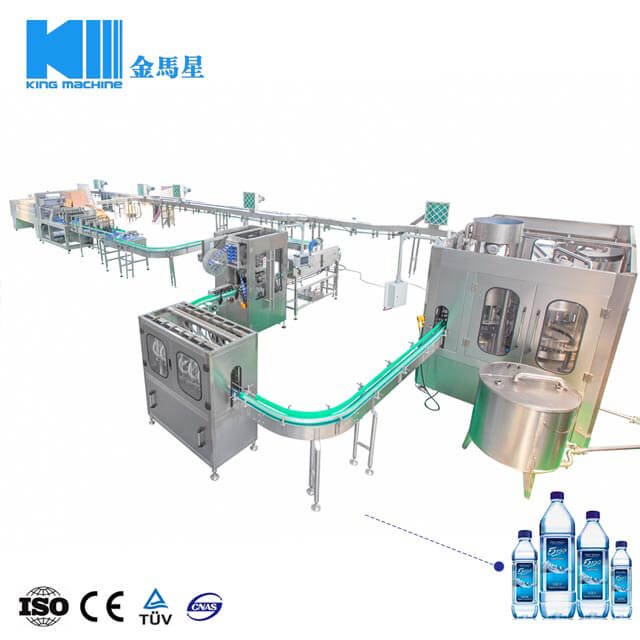
For manufacturers planning to build a bottled water production facility, a complete production line requires much more than a single filling machine. It involves multiple interconnected systems, including water treatment, PET bottle production, bottle conveying, rinsing, filling, capping, labeling, and packaging.
A well-designed water bottling line allows manufacturers to improve production efficiency, maintain consistent product quality, reduce manual labor, and achieve stable large-scale production. Each piece of equipment plays an important role in ensuring that bottles are processed smoothly from raw water to finished products ready for distribution.
This article explains the essential equipment included in a complete water bottling line and how each system works together. It will cover the main machines, supporting equipment, automation systems, and key factors to consider when selecting the right bottling solution for different production requirements.
1. What Is a Complete Water Bottling Line?
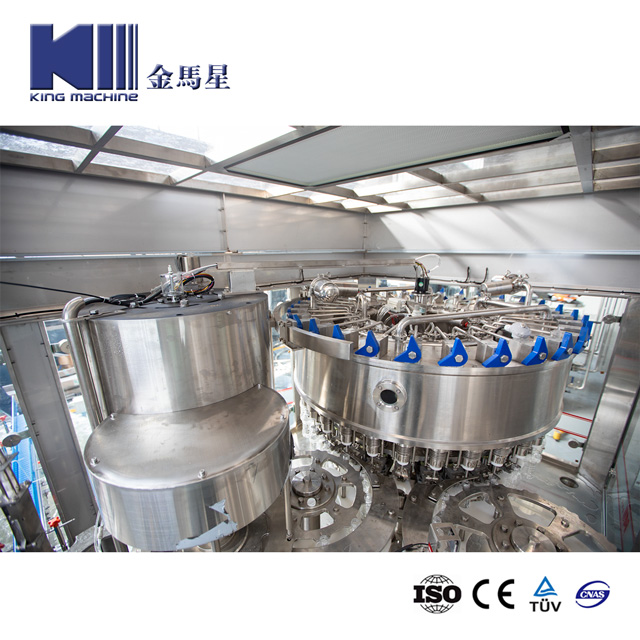
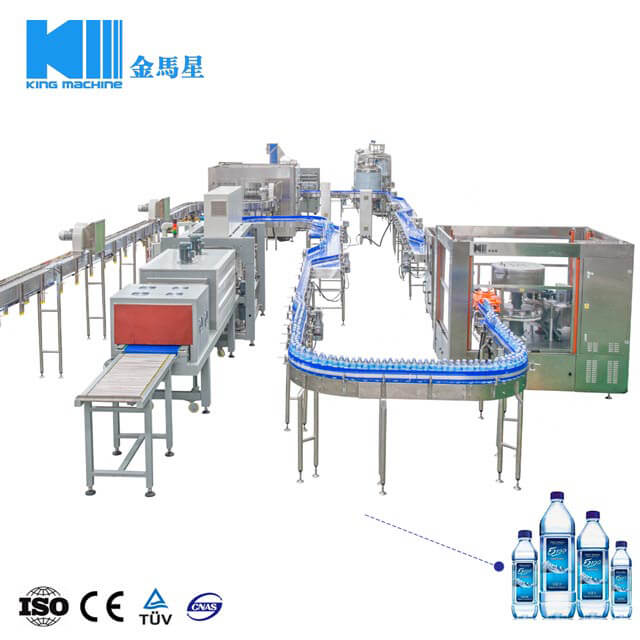
A complete water bottling plant is an integrated production system that automatically processes water from treatment to finished packaged products. It is not a single machine but a combination of multiple equipment units working together to complete the entire production process. The workflow typically includes water source, water treatment, bottle manufacturing, bottle conveying, rinsing, filling, capping, labeling, coding, inspection, packaging, and palletizing. By connecting each stage efficiently, a complete water bottling line ensures consistent production, improves operational efficiency, and helps manufacturers deliver safe, high-quality bottled water products for storage and distribution.
2. Core Equipment in a Complete Water Bottling Line
2.1 Water Treatment System
The water treatment system is the first stage of bottled water production. It removes impurities, microorganisms, and unwanted minerals from different water sources, such as groundwater, spring water, and municipal water, ensuring the water meets production requirements and improves final product taste.
Equipment | Function |
Sand Filter | Removes suspended particles |
Activated Carbon Filter | Removes chlorine and odor |
Precision Filter | Removes fine particles |
RO System | Removes dissolved substances |
UV Sterilizer | Eliminates microorganisms |
Ozone Generator | Provides sterilization |
2.2 PET Bottle Blowing Machine
Many bottled water manufacturers produce PET bottles in-house to improve flexibility and reduce packaging costs. The bottle blowing process includes heating PET preforms, stretching, and forming bottles through compressed air. Depending on production needs, manufacturers can choose semi-automatic machines for small-scale production or fully automatic systems for high-speed operations.
2.3 Air Conveyor System
The air conveyor connects the bottle blowing machine with the filling section by transferring empty PET bottles through the production line. It helps maintain smooth bottle movement while reducing bottle deformation and supporting continuous automatic production.
2.4 Bottle Unscrambler
For factories using purchased empty bottles, a bottle unscrambler automatically arranges bottles in the correct direction and feeds them into the production line. This improves bottle supply stability and reduces manual handling during production.
2.5 Bottle Rinsing, Filling and Capping Machine
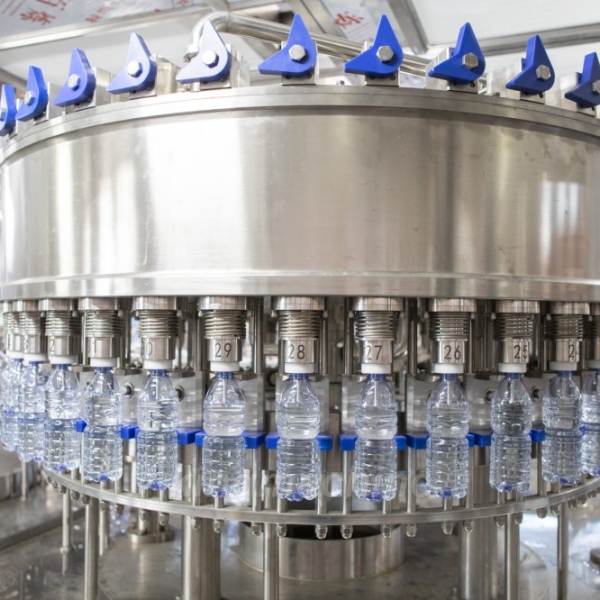
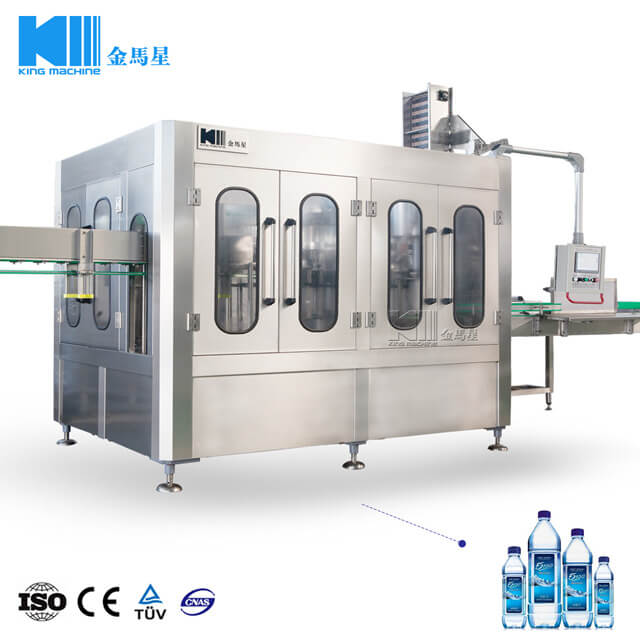
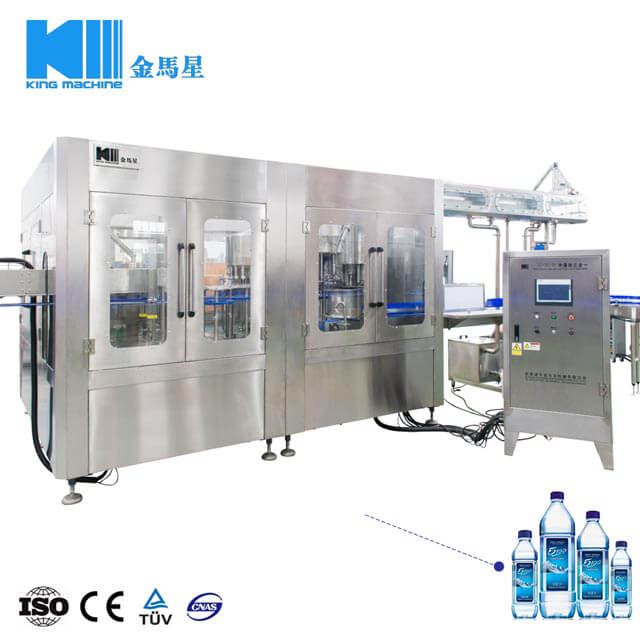
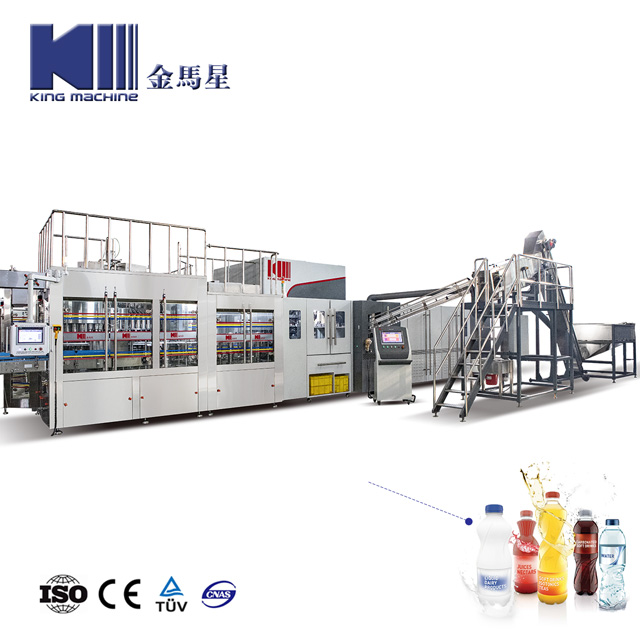
The rinsing, filling, and capping machine is the core equipment of a water bottling line. Modern production lines usually integrate these three processes into one monoblock system to achieve higher efficiency and better hygiene control.
During rinsing, bottles are cleaned to remove dust and particles before filling. The filling section uses methods such as gravity filling or normal pressure filling to ensure accurate volume and stable water flow. After filling, the capping system seals bottles securely, while proper torque control helps prevent leakage and avoid bottle or cap damage.
3. Supporting Equipment
In addition to the core filling system, auxiliary equipment is required to ensure smooth production operations. The cap feeding system, including the cap elevator, cap sorter, and cap chute, delivers caps in the correct direction and maintains stable feeding during capping.
After filling is complete, the labeling machine applies brand information, product details, and barcodes; common labeling methods include shrink-sleeve labeling, OPP labeling, and self-adhesive labeling.
Date coding machines print production dates, batch numbers, and expiry dates using inkjet or laser technology. Inspection systems check filling levels, cap presence, label position, leakage, and coding accuracy.
Finally, packaging and palletizing equipment prepare products for transportation, including shrink wrapping, carton packing, tray packing, and automatic palletizing solutions.
4. Conveyor System
The conveyor system allows bottles and packaged products to move smoothly between each production stage. Depending on the production requirements, conveyors may include air conveyors, belt conveyors, chain conveyors, and accumulation conveyors.
A well-designed conveying system helps reduce bottle jams, balance the speed between different machines, improve overall automation, and prevent unnecessary downtime during large-scale bottled water production.
5. Automation and Control System
Modern bottled water production lines use advanced automation systems based on PLC controllers and touch screens to improve production efficiency and operational stability. These control systems allow operators to adjust production speed, monitor machine status, detect alarms, and manage key operating parameters in real time. For large-scale bottling plants, automation can be further integrated with data monitoring systems and smart factory solutions. This enables manufacturers to collect production data, optimize processes, reduce manual errors, and achieve more efficient and intelligent bottled water production.
6. How to Choose the Right Equipment?
Selecting the right water bottling system equipment requires careful consideration of production requirements and future development plans. Production capacity is the first factor, which is usually measured by BPH (Bottle Per Hour). Small plants may choose 500-3,000 BPH lines, while medium and large factories often require 6,000-12,000 BPH or even 24,000+ BPH systems.
Bottle volume, neck size, and design also affect equipment configuration. In addition, different water types, such as purified water, mineral water, and spring water, require suitable treatment systems and filling solutions. Manufacturers should also consider the automation level, from manual and semi-automatic to fully automatic lines, as well as production space, maintenance requirements, and future expansion needs.
Conclusion
A complete water bottling line is a combination of multiple systems, including water treatment, bottle production, filling, packaging, and automation equipment. Each stage plays an important role in ensuring product quality, production efficiency, and stable operation. Choosing the right equipment configuration is essential for building a reliable bottled water production solution.
With years of experience in the PET packaging industry, King Machine provides complete beverage packaging solutions for customers worldwide. Supported by more than 1,000 beverage filling line projects, King Machine can offer customized solutions based on different production capacities, water sources, and packaging requirements.