The beverage industry is facing increasing demands for higher production efficiency, strict hygiene standards, lower operating costs, and flexible packaging solutions. Manufacturers need advanced equipment to improve productivity and maintain product quality.
Traditional PET bottling lines usually use separate machines for bottle blowing, conveying, filling, and capping. This structure requires more space, involves more transfer processes, and increases contamination risks and operation complexity.
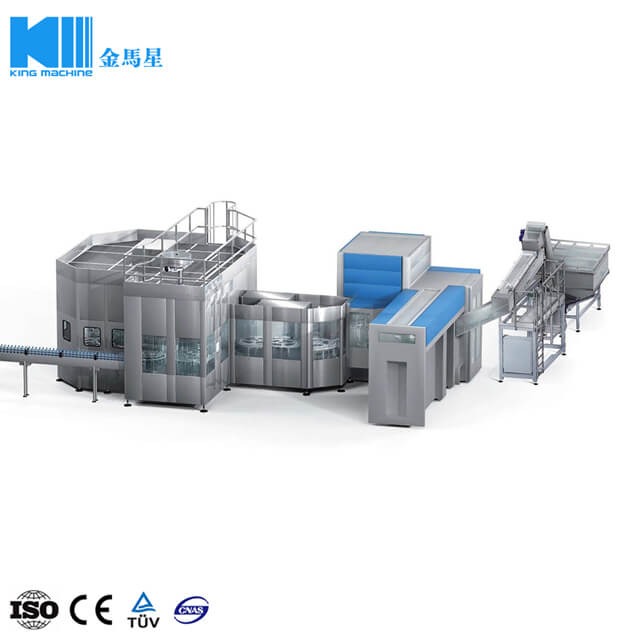
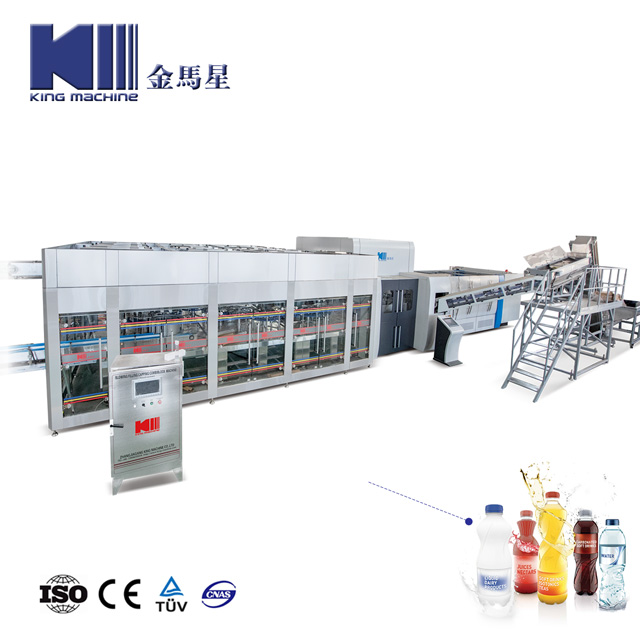
A blowing-filling-capping machine integrates bottle blowing, filling, and capping into one synchronized system, offering a more efficient and reliable solution. This article explores the key components inside the machine and their contribution to modern beverage production.
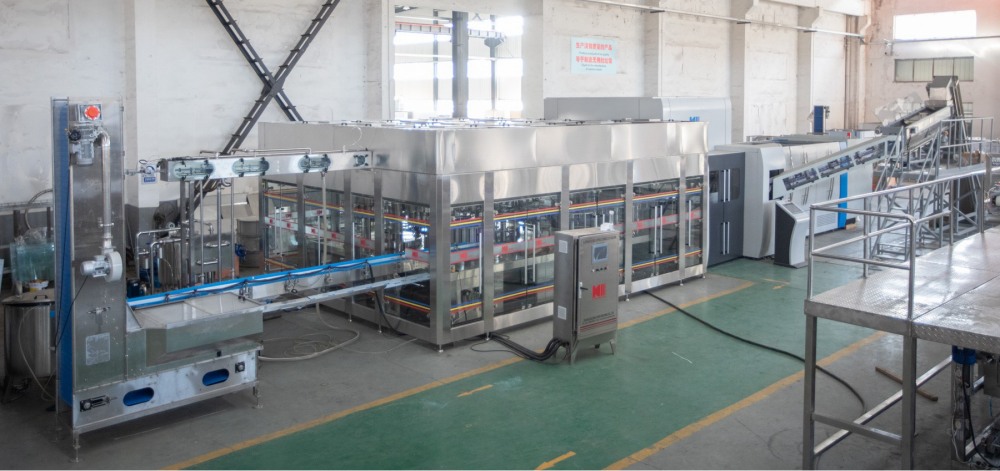
1. What Is a Blowing-Filling-Capping Machine?
A blow fill cap machine is an integrated PET beverage production system that combines three major processes into one synchronized unit: bottle blowing, filling, and capping.
Bottle Blowing:PET preforms are heated and stretched into bottles through high-pressure air, creating containers with consistent shape and quality.
Filling:Freshly formed bottles are directly filled with various beverages, including drinking water, carbonated drinks, juice beverages, and functional drinks.
Capping:Caps are automatically applied to ensure proper sealing, protect product quality, and maintain product safety.
Compared with traditional PET production lines, Blow-Fill-Cap machines provide a more compact and efficient solution:
Traditional Production Line | Blow-Fill-Cap Machine |
Separate machines | Integrated system |
Bottle transfer required | Direct bottle transfer |
More operators needed | Higher automation |
Larger footprint | Compact design |
More contamination points | Better hygiene control |
By integrating multiple processes into one platform, a blowing-filling-capping machine helps beverage manufacturers achieve higher efficiency, improved hygiene, and more reliable production.
2. Key Components Inside a Blowing-Filling-Capping Machine
2.1 Preform Feeding System
The preform feeding system ensures a continuous and stable supply of PET preforms to the heating section. It typically includes a preform hopper, feeding system, and sorting mechanism. By providing consistent preform delivery and reducing manual operation, it helps maintain stable production speed and improves overall line efficiency.
2.2 Preform Heating Unit
The preform heating unit prepares PET preforms for bottle formation through controlled heating. It consists of infrared heating lamps, temperature control systems, and multiple heating zones. Precise heating ensures uniform material distribution, better bottle quality, and lower energy consumption, directly affecting bottle strength and appearance.
2.3 Stretch Blow Molding System
The stretch blow molding system transforms heated preforms into finished PET bottles. The process includes preform heating, stretch rod stretching, high-pressure air blowing, and bottle forming. This system ensures accurate bottle shape, stable bottle thickness, and reduced PET material waste.
2.4 Bottle Transfer System
The bottle transfer system connects the blowing and filling processes. Unlike traditional lines that rely on air conveyors, Blow-Fill-Cap machines enable direct bottle transfer. This reduces bottle handling, lowers contamination risks, and improves production stability. 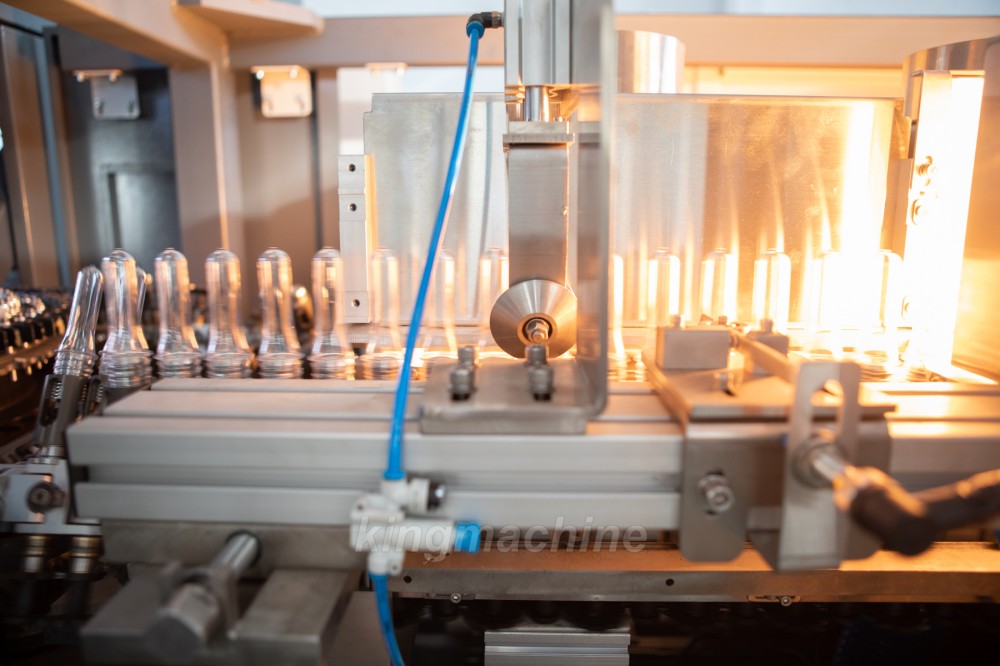
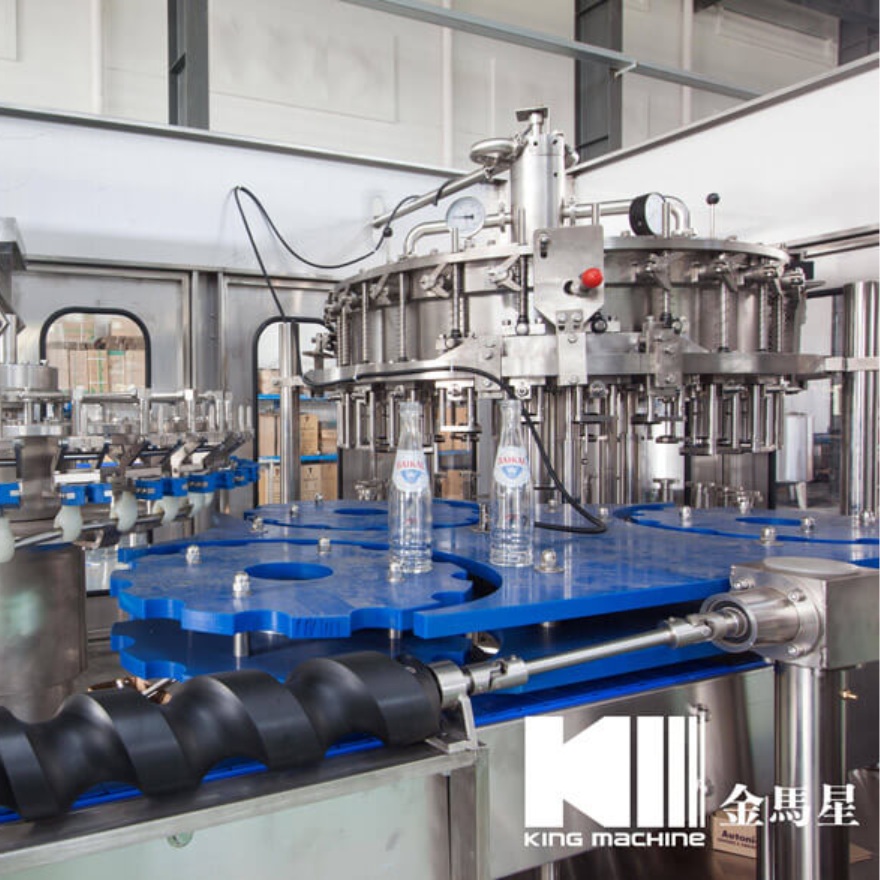
2.5 Filling System
The filling system is responsible for accurately dispensing beverages into bottles. It includes filling valves, filling tanks, and product pipelines. Designed for products such as water, carbonated beverages, and juice, it provides accurate filling volume, reduced product waste, and improved hygiene control.
2.6 Capping System
The capping system completes bottle sealing through components such as cap sorters, cap feeders, and capping heads. Precise cap application ensures consistent cap torque, prevents leakage, and protects product quality during storage and transportation.
2.7 PLC Control System
The PLC control system acts as the control center of the machine. With PLC controllers, touchscreen interfaces, and operation software, it enables process monitoring, parameter adjustment, and fault alarms, improving automation and simplifying daily operation.
2.8 Sensors and Detection System
Sensors and detection systems ensure accurate and safe production. Bottle detection sensors, position sensors, and fault monitoring sensors help identify missing bottles, prevent filling errors, and reduce production waste.
2.9 Cleaning and Hygiene System
The cleaning and hygiene system supports food safety through a closed production structure, food-grade materials, and a hygienic filling environment. These features reduce contamination risks, simplify cleaning procedures, and improve product safety.
2.10 Drive and Transmission System
The drive and transmission system ensures smooth and stable machine operation. Equipped with servo motors, transmission components, and mechanical control parts, it improves running accuracy, reduces downtime, and provides reliable performance for continuous beverage production.
3. How Does a Blowing-Filling-Capping Machine Work?
A blowing-filling-capping machine integrates multiple production processes into one continuous system. The main working steps include:
Step 1: PET Preforms Feeding
PET preforms are automatically supplied to the machine for continuous production.
Step 2: Preforms Heating
PET preforms are heated to the proper temperature for bottle forming.
Step 3: Stretch Blow Molding
Heated preforms are stretched and blown into finished PET bottles.
Step 4: Bottle Transfer
Newly formed bottles are directly transferred to the filling section.
Step 5: Filling
Bottles are accurately filled with beverages such as water, juice, or carbonated drinks.
Step 6: Capping
Caps are automatically applied to complete bottle sealing.
By combining blowing, filling, and capping processes in one system, the machine eliminates unnecessary bottle transfer, reduces contamination risks, and improves overall production efficiency. 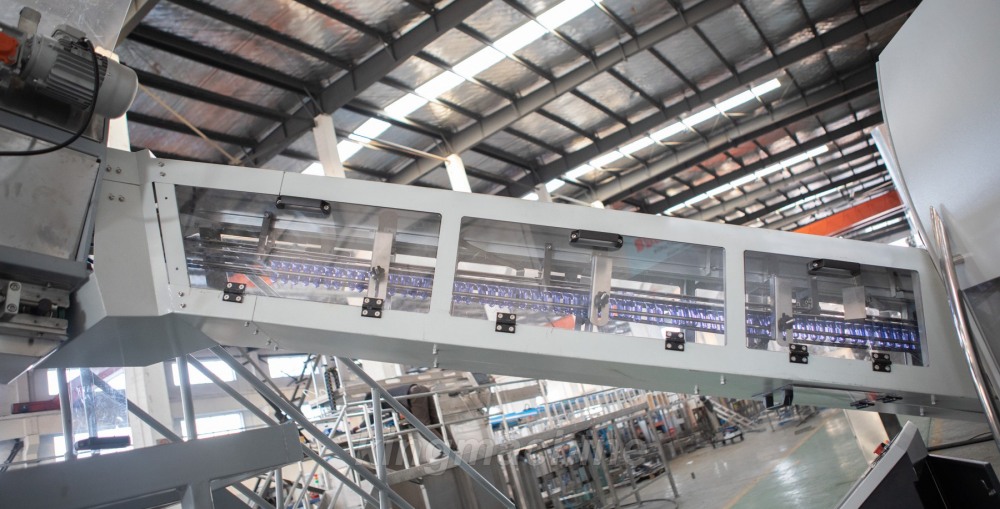
4. How to Choose the Right Blowing-Filling-Capping Machine?
Selecting the right blowing-filling-capping machine requires evaluating production needs, product types, and future expansion plans. Key factors include:
Production Capacity: Choose a suitable output according to your requirements, such as 6,000 BPH, 24,000 BPH, or 48,000 BPH.
Beverage Type: Different beverages require specific filling technologies, including still water, carbonated drinks, and juice.
Bottle Size: Ensure the machine supports your target bottle formats, such as 200ml, 500ml, 1.5L, and 5L.
Automation Level: Consider advanced features such as PLC control, packaging integration, and smart monitoring to improve efficiency and production management.
5. Conclusion
A blowing-filling-capping machine integrates bottle blowing, filling, and capping into one efficient production system. With a compact design, better hygiene control, higher production efficiency, lower operating costs, and improved automation, it provides beverage manufacturers with a reliable solution for modern PET packaging needs.
Choosing the right beverage production equipment requires reliable technology and professional manufacturing experience. King Machine provides advanced blowing-filling-capping machines and complete beverage production solutions, helping customers optimize their production lines. Contact us today to develop a customized solution for your beverage project.