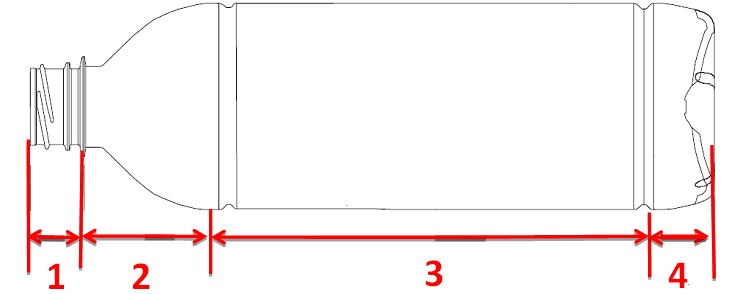
Blow Molding Process
The XC8 / CP8M series is a high-speed rotary PET blow moulding machine: preforms are fed, infrared-heated, transferred by the gripper, stretched and blown into the mould, then ejected as finished bottles. The reference below is extracted from the XC8-00 operation manual (Chapter K — Blow Molding Process).
Process flow diagram
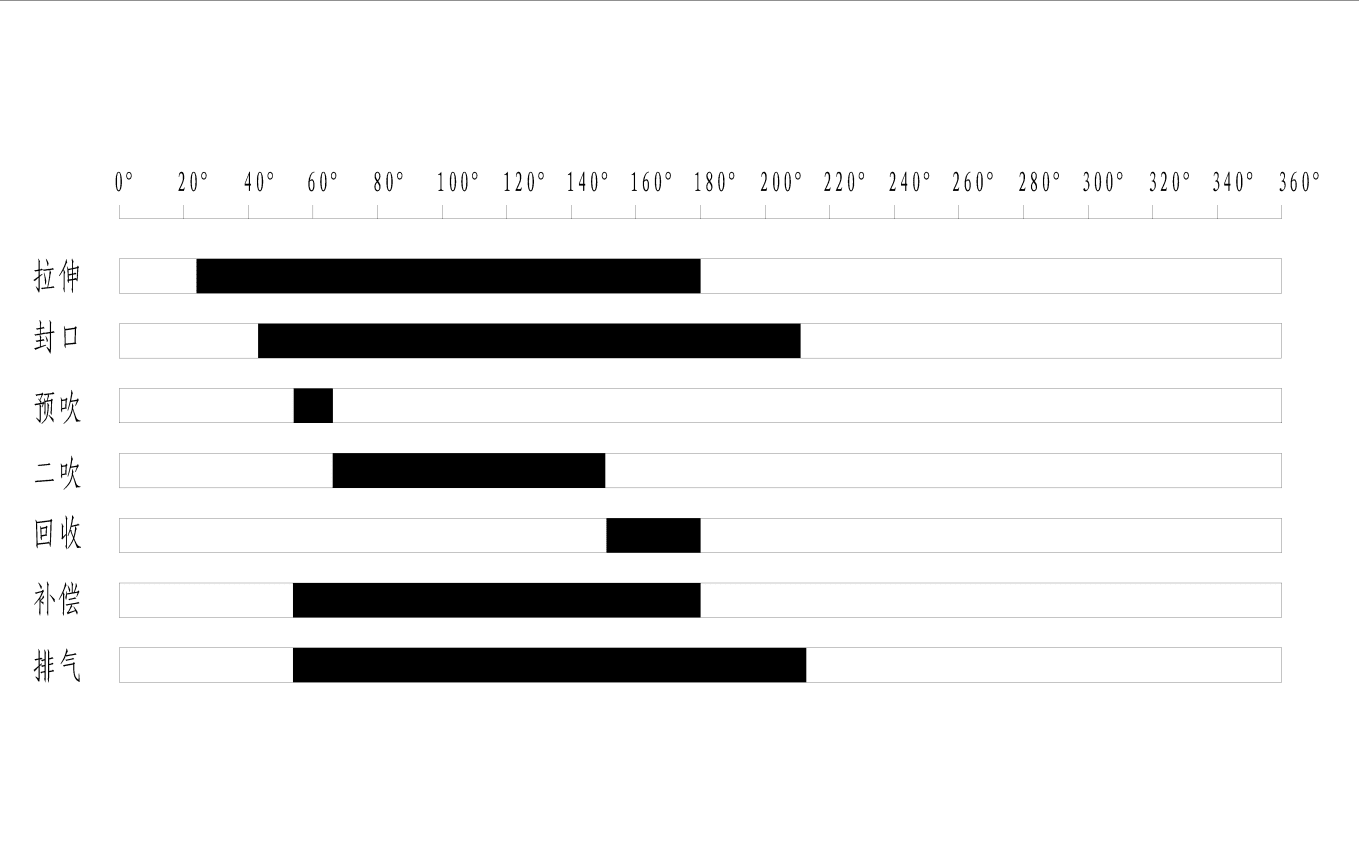
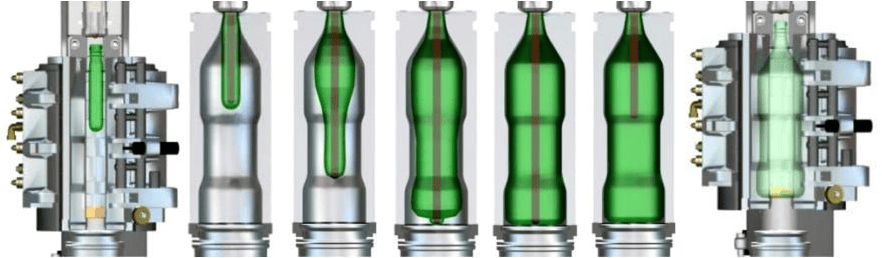
Machine operation — the preform-to-bottle sequence, step by step:
Preform lifting
Preform sorting
Preform supplying
Preform loading
Preform heating
Preform leaving the heater
Gripper transferring preform
Preform entering mould
Preform stretched & blown
Preform removed from mould
Transporting bottles
Standard parameters — temperature / pressure / time
| Parameter | Item | Standard / range |
|---|---|---|
| Pre-blow pressure | Low-pressure air | 6 – 13 bar |
| High-blow pressure | High-pressure air | 28 – 40 bar |
| Heating lamp-to-preform gap | Infrared heating | 15 – 20 mm |
| Preform-to-waterway clearance | Cooling channel | 2 mm per side(top / bottom / left / right) |
| Blowing air quality | Process (HP) compressed air | Oil-free dry filtered(see Table 1) |
| Stretch speed | Stretching cylinder | Set per bottle shape(governs top / bottom wall) |
| Blow time | Primary & secondary blow | Set per bottle(too short → volume loss) |
Maintenance & Operations Library
Two sub-columns help operators keep the line running: process debugging for commissioning and part replacement, and product-defect troubleshooting for solving bottle-quality issues. Content is extracted from the XC8-00 operation manual (Chapter H — Equipment Operation).
Process debugging
After installation, enter the HMI to set the process parameters (production speed, blowing angle, heating profile, etc.), then run automatically and fine-tune until the bottle quality meets the requirement. Common on-machine adjustments:
Change the heating head (when preform mouth diameter changes)
Adjust the cooling water channel of the heating box (outer / inner light box, lamp-to-preform distance)
Replace the infrared lamp
Change the blowing nozzle
Change the outlet star-wheel (and adjust the bottle guard height)
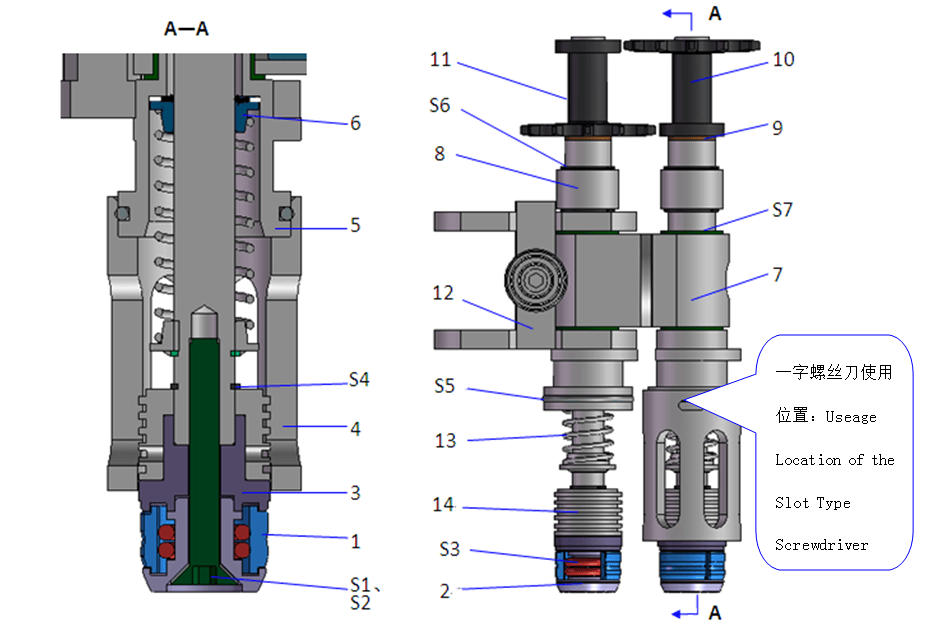
Product defect troubleshooting
The table below lists common bottle defects, their likely causes and the eliminating methods. For PLC fault / solution codes, see the reference diagram.
| No. | Fault | Reasons for fault | Eliminating methods |
|---|---|---|---|
| 1 | Bottles cannot be formed | Blow pressure too low; flow insufficient; stretch ratio too large; heating temperature too low / time too short; stretch speed too slow; low-pressure air too low. | Raise blow pressure & flow; choose correct preform; raise heating voltage / extend heating time; raise stretch & low-pressure. |
| 2 | Uneven wall (irregular) | Uneven preform; poor / uneven heating section; stretch ratio too small; resin viscosity too low. | Correct preform core & raise moulding temp; adjust each heating layer voltage; choose proper preform. |
| 3 | Top thin, bottom thick | Stretch too fast; first-blow pressure low; blow timing wrong; bottom cold / top hot. | Lower stretch speed; raise first-blow pressure; advance blowing; raise bottom temp / lower top temp. |
| 4 | Bottom thin, top thick | Stretch too slow; first-blow pressure high; blow timing wrong; preform temp improper. | Raise stretch speed; lower first-blow pressure; delay blowing; adjust heating voltage. |
| 5 | Pearly / white stress | Uneven wall; over-heating; outer wall hotter than inner. | Correct preform core; lower lamp voltage / heating time; increase cooling wind. |
| 6 | Poor transparency | Preform not clear; over-heating / long time; humidity high; water in air; slow stretch; rough mould; bad material. | Re-choose preform; lower temp / shorten time; dry preform; check dryer & drains; raise stretch; polish mould. |
| 7 | Bottle burst | Preform too cold; blow pressure too high; timing wrong; slow stretch; low-viscosity / too much recycle PET. | Raise preform heating temp; lower blow pressure; delay blowing; raise stretch; change preform. |
| 8 | Wrong shape | Uneven heating; uneven preform; low blow pressure / flow; stretch ratio too big; poor mould exhaust; mould too cold; short second blow. | Adjust heating; re-choose preform; raise blow pressure & flow; smaller stretch ratio; improve exhaust; raise mould temp; prolong second blow. |
| 9 | Neck deformation | Poor neck cooling; neck temp wrong; stretch too early / blow too late; low pre-blow flow; leaking nozzle; gripper issue. | Adjust heating process; coordinate stretch & pre-blow timing; raise pre-blow flow; check / change nozzle; maintain gripper. |
| 10 | Bottom off-centre | Pre-blow pressure high; blow time too short; slow stretch; uneven preform / heating; pre-blow flow too big; wrong start angle. | Lower pre-blow pressure; extend blow time; raise stretch; re-choose preform; adjust heating; lower pre-blow flow; adjust start angle. |
| 11 | Spots on wall | Impurity in preform / mould; preform scratched / dented; water in compressed air. | Check preform; polish mould cavity; change preform; remove water from air. |
| 12 | Volume reduction | Low second-blow pressure / short time; poor cooling; low preform temp; low HP flow; wrong preform; small mould. | Raise blow pressure & extend time; lower mould temp; raise preform temp; increase air source; change preform; adjust mould volume. |