As beverage manufacturers pursue higher efficiency, lower costs, and smarter production systems, selecting the right solution has become a key strategic decision. Producers typically choose between an integrated bottling system and a conventional beverage filling line.
Both systems support high-volume production but differ in layout, automation, footprint, and long-term cost. The decision is not only about equipment, but about choosing a scalable production structure.
The blowing filling capping combiblock is increasingly preferred for its compact design, higher efficiency, and simplified operation, while traditional lines remain suitable for flexible or phased investment strategies.
This article compares both systems across key factors including investment, efficiency, layout, maintenance, and application scenarios to help manufacturers make the right choice.
1. What Is a Blowing-Filling-Capping Combiblock?
Definition and Integrated Design
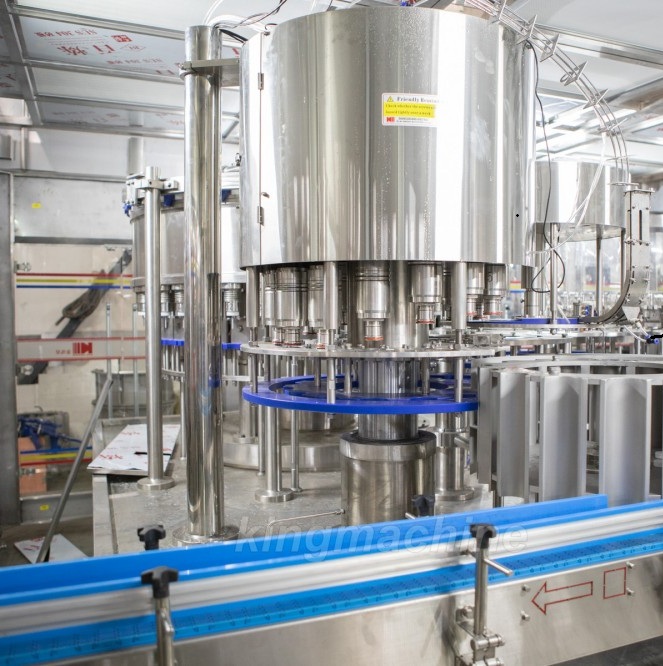
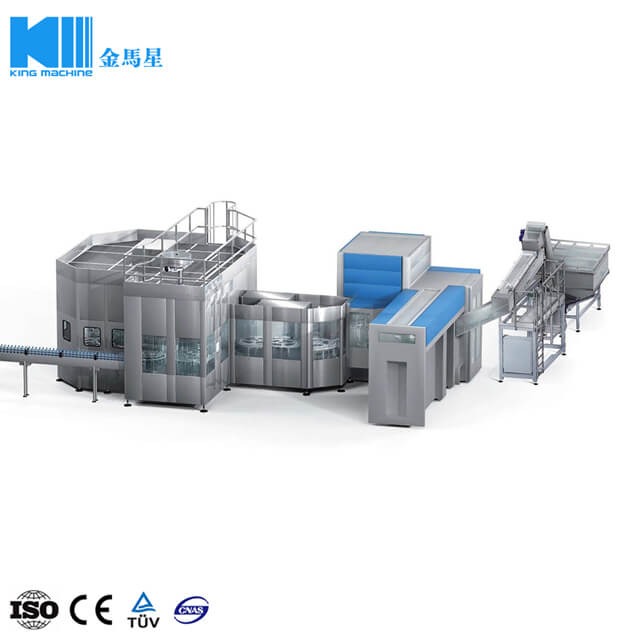
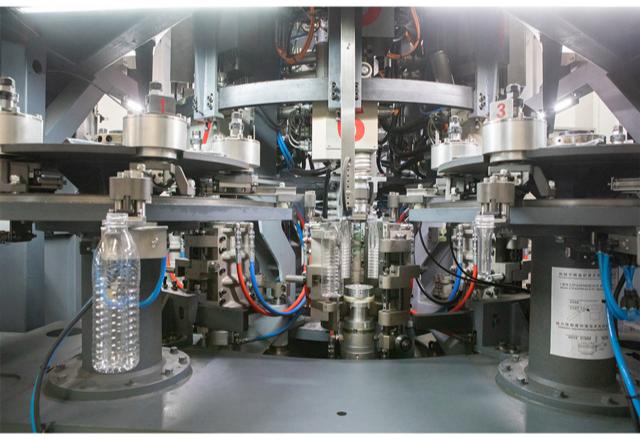
A blowing-filling-capping combiblock is an integrated beverage production system that combines bottle blowing, filling, and capping into one continuous process. All steps are completed within a single compact unit, reducing bottle handling, lowering contamination risk, and improving overall line efficiency.
Working Principle
The system integrates multiple production stages into one streamlined line. Bottles are formed from preforms, filled immediately, and then capped without leaving the system. This continuous process shortens conveying distance and improves production stability.
Automation and Applications
Modern systems use PLC control and servo-driven technology for centralized operation and precise process management. The blowing-filling-capping machine is widely used for bottled water, juice, tea drinks, and carbonated beverages, offering strong flexibility across different production needs.
2. What Is a Traditional Beverage Filling Line?
System Structure
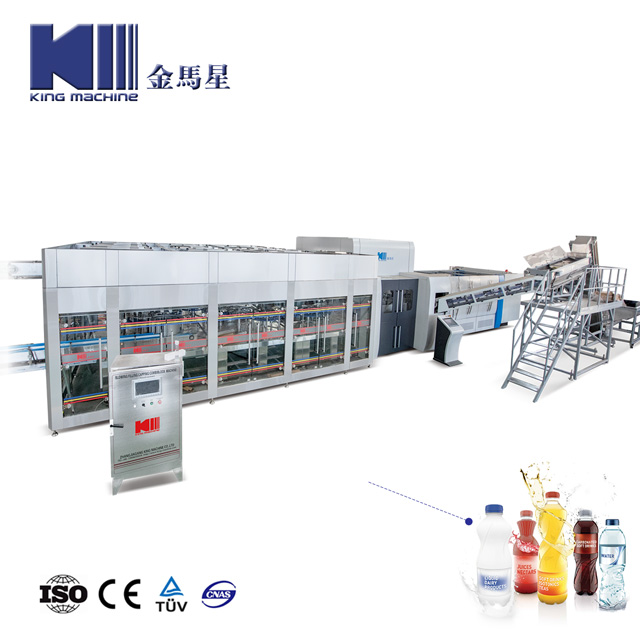
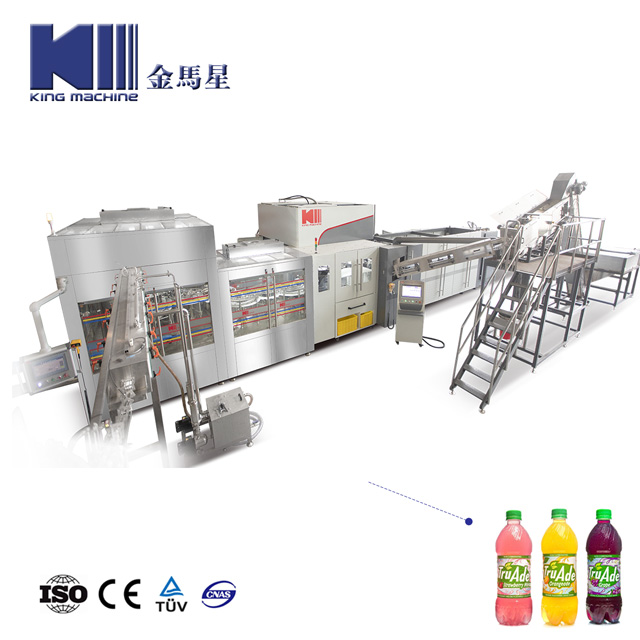
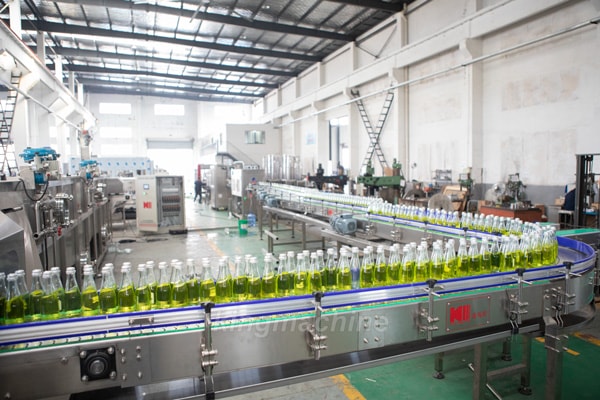
A traditional beverage filling line is a modular system made up of multiple independent machines connected by conveying systems. Each unit performs a specific function, allowing flexible configuration based on production capacity, bottle type, and beverage category.
Main Equipment
A typical line includes a bottle blower (if PET bottle production is required), air conveyor, bottle rinser, filling machine, capping machine, labeling machine, and packing machine. Each machine operates independently but is coordinated through the central control system.
Conveying System
Bottles are transferred between machines via air or chain conveyors. This modular layout offers strong flexibility for expansion and equipment upgrades, but results in longer conveying distances and more intermediate handling compared with integrated systems.
3. Blowing-Filling-Capping Combiblock vs. Traditional Beverage Filling Line
The main difference between the two systems is production architecture. An integrated system completes the entire process within one unit, while a traditional setup relies on multiple independent machines connected through conveyors, resulting in different performance in efficiency, space usage, and operation complexity.
Comparison Item | Combiblock | Traditional Filling Line |
Equipment Integration | Integrated system | Separate machines |
Floor Space | Compact | Larger |
Initial Investment | Higher | Lower |
Production Efficiency | Higher | Lower |
Labor Requirement | Fewer operators | More operators |
Bottle Transfer | No external transfer | Multiple transfer stages |
Product Hygiene | Lower contamination risk | Higher exposure risk |
Maintenance | Centralized | Distributed |
Production Flexibility | Lower | Higher |
Future Expansion | System-based upgrade | Modular expansion |
The water filling line offers greater flexibility and easier phased investment, while the integrated system focuses more on efficiency, compact layout, and stable high-speed production.
4. Advantages of a Blowing-Filling-Capping Combiblock
An integrated system like the Combiblock solution improves beverage production by combining multiple processes into a single streamlined unit.
Higher Production Efficiency : Shorter transfer distances between processes enable faster, more continuous production flow.
Lower Labor Requirements : Fewer standalone machines reduce the need for multiple operators and simplify workforce management.
Smaller Factory Footprint : Integration of key processes significantly reduces equipment layout space and lowers facility cost.
Better Hygiene and Product Safety : Bottles stay within a closed system, minimizing exposure and reducing contamination risk.
Simplified Production Management : Centralized control improves monitoring, operation consistency, and maintenance efficiency.
5. When Is a Traditional Beverage Filling Line a Better Choice?
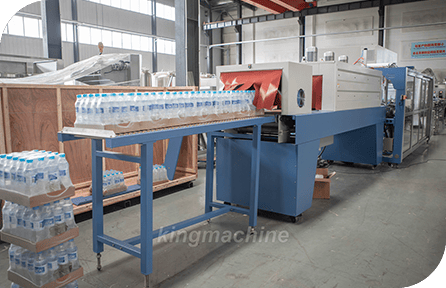
A traditional system is often more suitable for manufacturers with existing production facilities that need incremental upgrades rather than full replacement. It allows individual equipment to be added or replaced based on current needs, making it a practical solution for phased development.
It is also preferred in situations with limited investment budgets, frequent changes in bottle formats or products, and gradual capacity expansion plans. In these cases, a water production line offers greater flexibility, enabling step-by-step investment and easier adaptation to evolving production requirements.
6. Which Solution Is Right for Your Beverage Plant?
The choice mainly depends on production scale, budget, and automation level.
Small Beverage Factory : Small producers usually focus on lower investment and flexibility. A traditional system is often preferred for gradual capacity building.
Medium-Sized Bottling Plant : Medium plants need a balance between efficiency and flexibility. Both solutions can be considered depending on space and expansion plans.
Large High-Speed Beverage Production Plant : Large-scale factories prioritize efficiency and automation. An integrated system is more commonly chosen due to higher output and compact layout.
7. Key Considerations Before Investing in a New Filling Line
Before selecting a system, manufacturers should evaluate several key factors that impact long-term performance and investment return.
Production Capacity Planning : Future output should be considered alongside current demand to avoid early bottlenecks and costly upgrades.
Beverage Types : Different products such as water, juice, or carbonated drinks require different processing and hygiene configurations.
Factory Layout : Available space directly affects equipment selection, especially when evaluating a water packing line for compact or large-scale plants.
Total Cost of Ownership (TCO) : Beyond purchase price, long-term costs such as energy, maintenance, and labor should be considered.
Future Expansion Plans : The system should support future capacity growth without requiring major restructuring.
8. Conclusion
Both systems serve the beverage industry effectively, and there is no absolute superiority between them. The right choice depends on production strategy, budget, and operational goals.
For manufacturers seeking higher efficiency, automation, and long-term operational benefits, integrated filling solutions are often the preferred option. For this type of equipment, King Machine provides tailored systems and complete beverage production solutions to support different plant requirements.