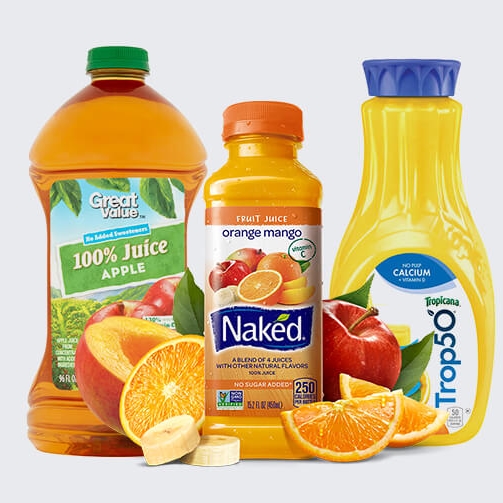
The global juice market is evolving as consumers increasingly prefer healthier beverages made with natural ingredients. Growing demand for NFC (Not From Concentrate) juice and pulp-containing products has raised expectations for freshness, flavor, and nutritional quality.
As a result, modern juice filling machines must minimize oxygen exposure, handle fruit pulp without clogging, preserve product quality, and meet strict hygiene standards. Since different juice types have different processing characteristics, they also require different filling technologies and equipment configurations.
This article explores the key filling requirements for pulp juice and NFC juice, helping manufacturers choose the right juice filling machine for their production needs.
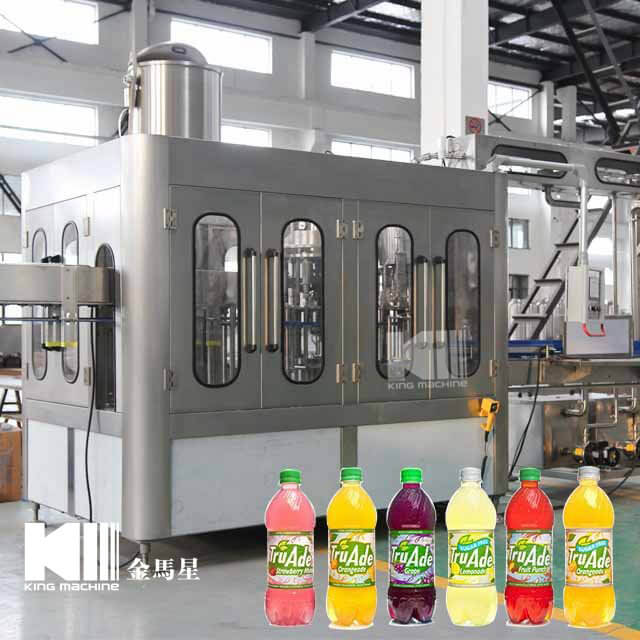
1. What Is a Juice Filling Machine?
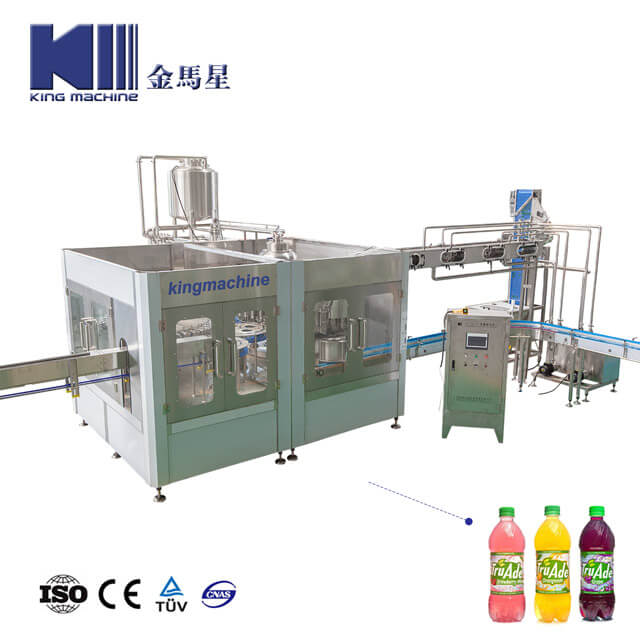
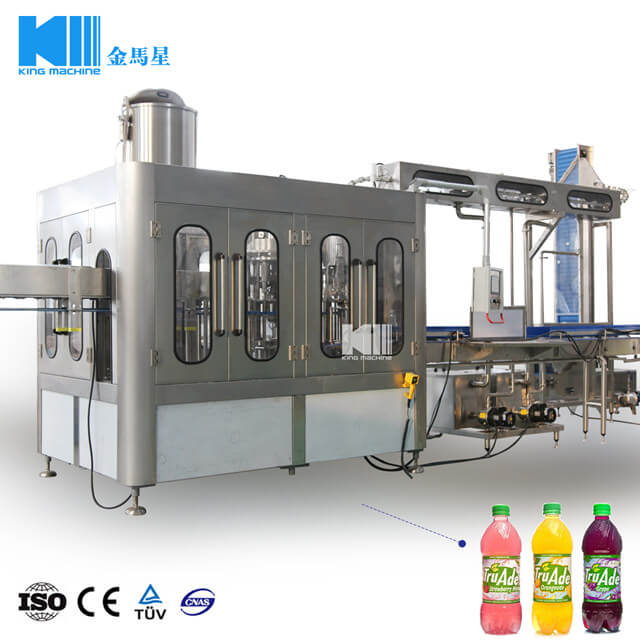
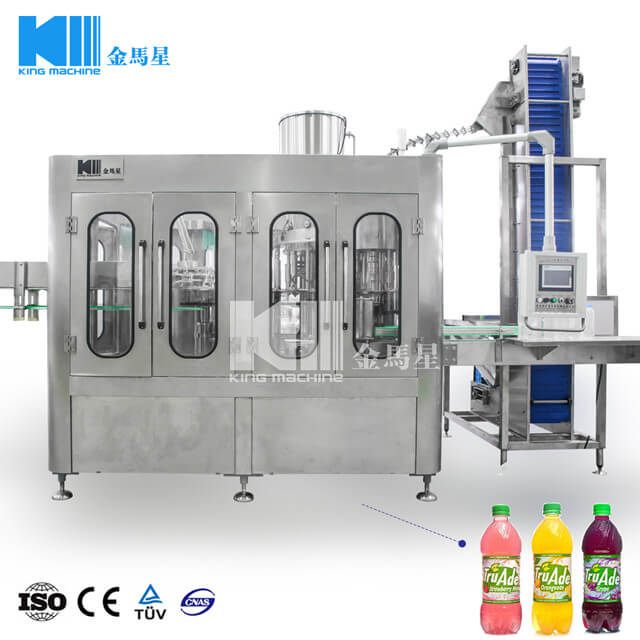
A juice filling machine is specialized equipment designed to fill processed juice into bottles while maintaining product quality, hygiene, and filling accuracy. Compared with water filling machines, it is better suited for products with higher viscosity, fruit pulp or particles, and greater sensitivity to oxidation.
Basic Definition: As a key component of a beverage production line, a juice filler machine integrates filling and capping into a continuous process, ensuring efficient, hygienic, and reliable packaging for various juice products.
Working Principle: Depending on the product, the machine may use hot filling, aseptic filling, or cold filling technology. Bottles are automatically positioned, accurately filled, and capped in a synchronized process to maintain consistent production efficiency.
Key Features: Modern juice filling machines feature hygienic construction, precise filling control, and effective oxygen management to help preserve product quality, natural flavor, and shelf life.
2. What Are Pulp Juice and NFC Juice?
Pulp juice and NFC juice have different product characteristics, resulting in different filling requirements.
Pulp Juice: Pulp juice contains fruit pulp or particles, requiring filling machines with anti-clogging designs and stable flow control to ensure even particle distribution and consistent filling quality.
NFC Juice: NFC juice is made directly from fresh fruit without concentration or reconstitution. Because it is more sensitive to oxygen and temperature, the filling process must minimize oxidation while preserving its natural flavor and nutritional value.
Key Processing Differences: Pulp juice filling focuses on particle handling and flow stability, while NFC juice requires stricter oxygen and temperature control. Selecting the right filling technology helps ensure product quality and efficient production.
3. Juice Filling Machine Requirements for Pulp Juice
Pulp juice requires specialized filling equipment because fruit particles can affect flow stability and filling consistency. A suitable juice bottle filling machine should be designed to handle particle-containing products while maintaining reliable production.
Anti-Clogging Design: Large-diameter pipelines and specially designed filling valves help prevent blockages, allowing pulp and particles to flow smoothly through the filling system.
Mixing & Suspension Stability: A stable circulation system keeps fruit pulp evenly suspended, reducing sedimentation and ensuring consistent product quality.
Filling Accuracy Challenges: Fruit particles may influence filling accuracy. Optimized filling control and valve design help maintain consistent fill volumes while reducing product waste.
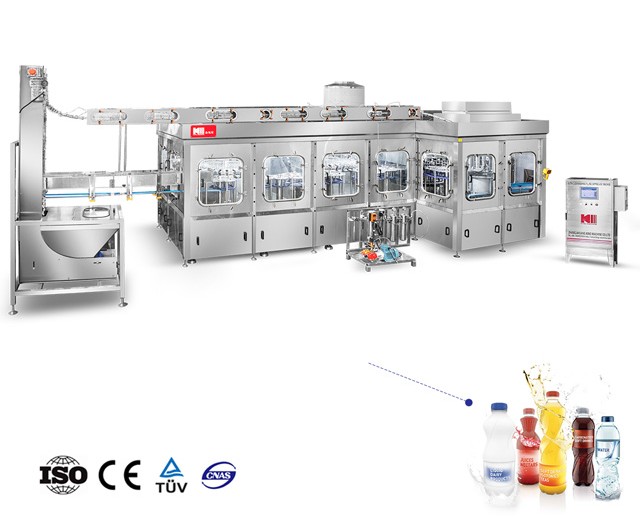
4. Juice Filling Machine Requirements for NFC Juice
NFC juice is highly sensitive to oxygen and temperature changes, requiring aseptic filling equipment that preserves its natural flavor, freshness, and nutritional value throughout production.
Oxygen Control System: Effective oxygen control is essential to reduce oxidation during filling. In many cases, nitrogen flushing is used to remove residual oxygen before capping, helping maintain product quality and extend shelf life.
Low-Temperature Filling: Controlled low-temperature filling helps preserve the juice’s original flavor, color, and heat-sensitive nutrients.
Hygiene & Sterile Design: Hygienic machine construction combined with CIP systems and aseptic filling conditions helps ensure food safety and stable product quality while minimizing contamination risks.
5. Pulp Juice vs. NFC Juice Filling Process Comparison
Item | Pulp Juice | NFC Juice |
Product Type | Juice with pulp/fruit particles | Pure juice |
Primary Filling Challenge | Particle handling and flow stability | Oxygen control and oxidation prevention |
Equipment Focus | Anti-clogging design and stable flow control | High-hygiene construction and oxygen protection systems |
Typical Filling Method | Hot filling or standard ambient filling | Aseptic filling or cold filling |
Line Complexity | Moderate | High |
This comparison highlights the key difference in production priorities: pulp juice filling focuses on managing solid content and ensuring stable product flow, while NFC juice filling requires stricter control of oxygen exposure, temperature, and hygienic conditions throughout the entire process.
6. How to Choose the Right Juice Filling Machine
Selecting the right juice filling machine depends on several key factors, including product type, production capacity, packaging format, and automation level.
Based on Product Type
Product type is the main factor in selection. Pulp juice requires strong conveying ability and anti-clogging design to handle fruit particles, while NFC juice needs aseptic conditions and strict oxygen control to maintain freshness and quality.
Based on Production Capacity
Small-scale operations can use simpler and more flexible systems, while large-scale production requires high-speed juice can filling machines that ensure stable, continuous output.
Based on Packaging Type
Different containers such as PET bottles, glass bottles, or hot-fill packaging require specific temperature control and machine configurations to ensure stable filling and product safety.
Based on Automation Level
Semi-automatic systems are suitable for basic production needs, while fully automated aseptic filling lines are preferred for high-end juice production with higher hygiene and efficiency requirements.
7. Conclusion
A modern juice production line typically consists of water treatment, juice mixing and batching systems, a juice filling machine, labeling equipment, and downstream packaging machinery. Among these components, the juice filling machine serves as the key link between product preparation and final packaging, directly affecting filling accuracy, hygiene standards, shelf life, and overall line efficiency.
Pulp juice and NFC juice place different demands on filling equipment, especially in particle handling, oxygen control, and sanitary design. Therefore, the key decision lies in selecting the right filling technology based on specific product characteristics and production goals.
When planning a production line, manufacturers should prioritize product quality, operational efficiency, and food safety together. King Machine provides tailored juice filling machine solutions to support diverse production needs and optimize overall bottling line performance.