News
Site Editor
 Site
/uploads/image/694e24f48271f.png
Explore PET bottle juice filling processes, equipment components, filling technologies, and production solutions to improve efficiency, quality, and beverage production performance.
Site
/uploads/image/694e24f48271f.png
Explore PET bottle juice filling processes, equipment components, filling technologies, and production solutions to improve efficiency, quality, and beverage production performance.
PET Bottle Juice Filling: Complete Guide to Equipment, Process, and Production Solutions
Views: 267
Author: Site Editor
Publish Time: 2026-08-19
Origin: Site
Fruit juice has become a popular choice among consumers seeking natural, nutritious beverages. As packaging requirements continue to evolve, PET bottles are widely used for fruit juice products due to their lightweight nature, ease of transport, and durability.
However, PET bottle juice filling is not simply a packaging process. Manufacturers need to carefully manage various factors, including juice characteristics, filling accuracy, hygiene standards, hot filling or cold filling requirements, and production efficiency. The right filling technology plays a crucial role in maintaining product quality while ensuring stable and reliable operation.
This guide provides an in-depth overview of the PET bottle juice filling process, including key equipment components, filling technologies, common production challenges, and important factors to consider when selecting a juice filling system.
1. Why PET Bottles Are Widely Used for Juice Packaging
PET bottles have become a popular packaging choice for juice products because they provide a balance between practicality, appearance, and production efficiency.
PET Bottle Advantage | Application Value |
Lightweight structure | Easier storage and transportation |
Various bottle shapes | Supports brand differentiation |
Multiple capacities | Suitable for different markets |
Production compatibility | Works with automated filling systems |
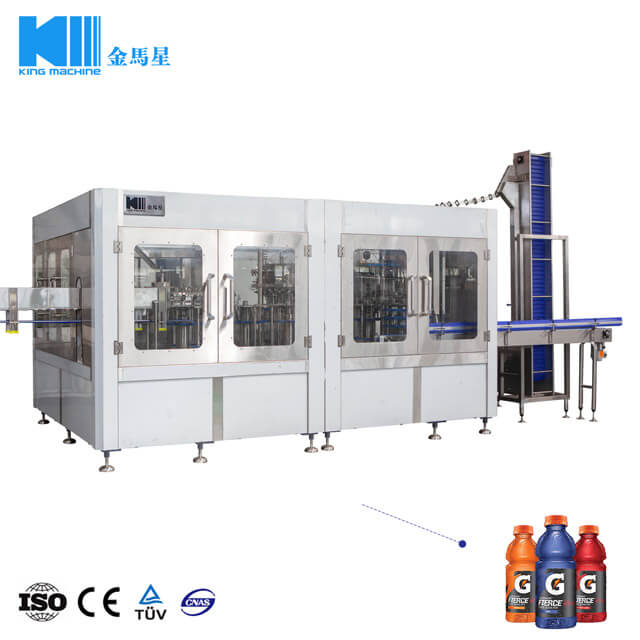
PET bottles are suitable for a wide range of beverages, including orange juice, mango juice, apple juice, and mixed fruit drinks. In addition, modern PET juice filling machines are designed to integrate filling, capping, and packaging processes, enabling manufacturers to achieve high-speed production with stable quality and improved operational efficiency.
2. PET Bottle Juice Filling Process Explained
2.1 Bottle Preparation and Cleaning
Empty PET bottles are fed into the production line and rinsed through a cleaning system to remove dust, particulates, or potential contaminants. This step ensures hygienic conditions and minimizes the risk of compromising juice quality during the filling process.
2.2 Juice Filling Process
After bottle cleaning, juice is accurately filled into PET containers using different filling technologies based on product characteristics. Gravity filling is commonly used for low-viscosity and clear juices, while pressure filling is more suitable for thicker beverages or juices containing pulp. For products requiring longer shelf life, hot filling uses controlled high temperatures to improve product stability, while aseptic filling provides a sterile environment for beverages that need extended storage periods.
2.3 Capping and Sealing
After filling, the bottles proceed to the capping stage, where the caps are applied and securely sealed. This reliable sealing process prevents leakage, protects the juice from external contamination, and preserves product freshness.
2.4 Labeling and Packaging
The final stage includes labeling and packaging, where product information is applied to bottles and finished products are prepared for distribution.
3. Key Components of a PET Bottle Juice Filling Machine
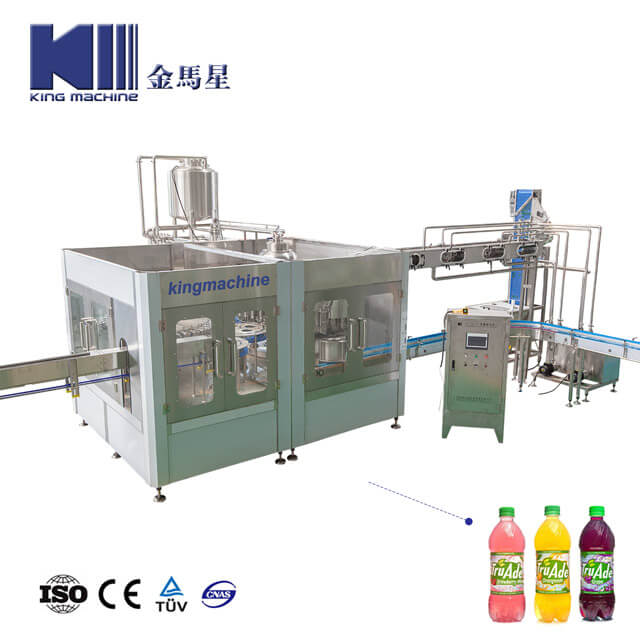
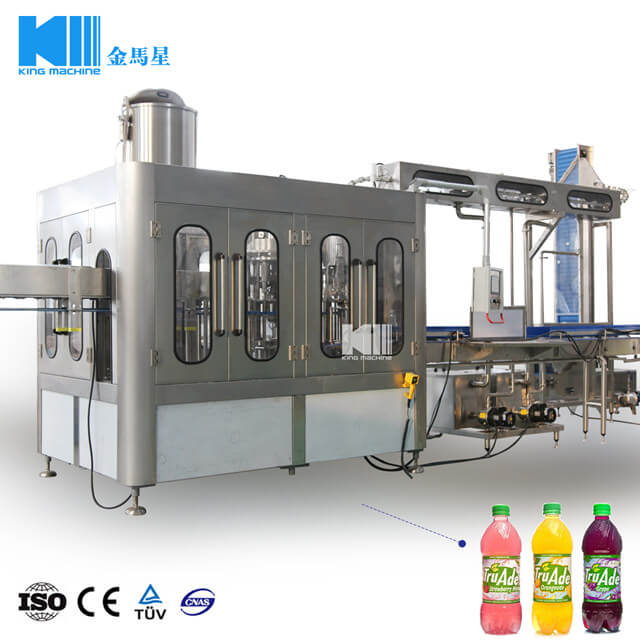
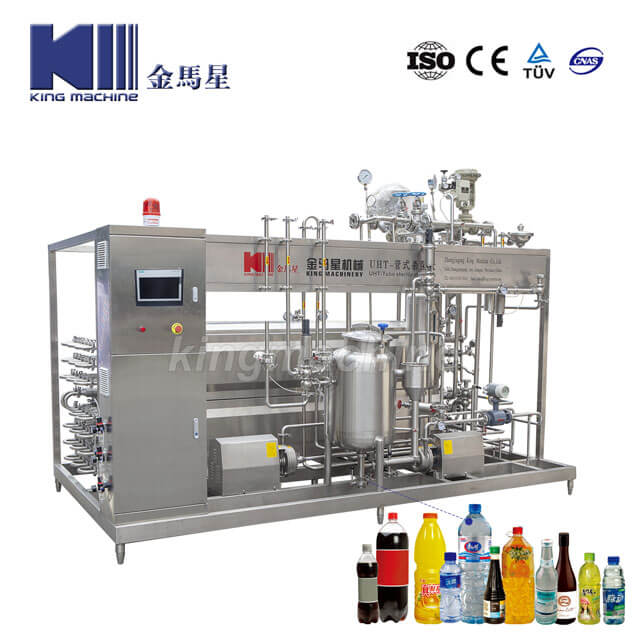
A PET bottle juice filling machine consists of multiple integrated components that work together to achieve accurate filling, reliable sealing, and efficient production. Each part plays an important role in maintaining product quality and ensuring smooth operation throughout the beverage production process.
Component | Main Function |
Filling valves and nozzles | Precise liquid control |
Stainless steel juice tank | Safe product storage |
Capping system | Secure bottle sealing |
PLC control system | Intelligent process management |
Conveyor system | Continuous line operation |
4. Challenges in PET Bottle Juice Filling and Solutions
4.1 Maintaining Filling Accuracy at High Speed
High-speed juice production requires precise control to ensure consistent filling performance. Without appropriate technical support, issues such as overfilling or underfilling—leading to product waste—may occur. Modern filling systems rely on precision filling valves, PLC control systems, and automatic adjustment capabilities to ensure stable production output.
4.2 Preventing Contamination During Filling
Fruit juice is susceptible to microbial contamination and environmental factors during production. To ensure food safety, PET bottle juice filling production lines feature a hygienic design, utilizing stainless steel contact parts and sterilization processes to minimize the risk of product contamination.
4.3 Handling Different Juice Characteristics
Different juice types require specific filling solutions to achieve the best results.
Juice Type | Main Challenge |
Orange Juice | Pulp control |
Mango Juice | High viscosity |
Apple Juice | Oxidation prevention |
4.4 PET Bottle Deformation During Hot Filling
Manufacturers need heat-resistant PET bottles, accurate temperature control, and proper filling processes to prevent bottle deformation and maintain packaging integrity.
5. How to Choose the Right PET Bottle Juice Filling Machine
5.1 Consider Production Capacity
A suitable PET bottle juice filling machine must meet current production needs while also allowing room for future capacity expansion. Key factors regarding production capacity include:
Bottles per hour
Factory production scale
Expected business growth
5.2 Match the Machine With Juice Type
Different juice products require different filling solutions. Manufacturers should consider the characteristics of their beverages, including:
Clear juice
Pulp juice
Concentrated juice
5.3 Evaluate Automation Level
The automation level should be selected based on production needs and investment plans:
5.4 Check Machine Reliability and After-Sales Support
Equipment reliability and after-sales service directly impact long-term production performance. Juice manufacturers should evaluate:
Conclusion
Filling fruit juice into PET bottles is a comprehensive process that requires the proper integration of filling precision, hygiene control, and packaging technology. Every stage—from bottle preparation and the filling method to sealing and packaging—directly impacts production efficiency and the quality of the final product. Selecting the right filling system enables beverage manufacturers to meet diverse production needs and ensure stable operations.
With extensive experience in beverage packaging solutions, King Machine helps beverage manufacturers worldwide build efficient and reliable PET juice filling lines. By providing advanced equipment and customized production solutions, King Machine supports customers in improving productivity, maintaining consistent beverage quality, and developing competitive beverage production operations.