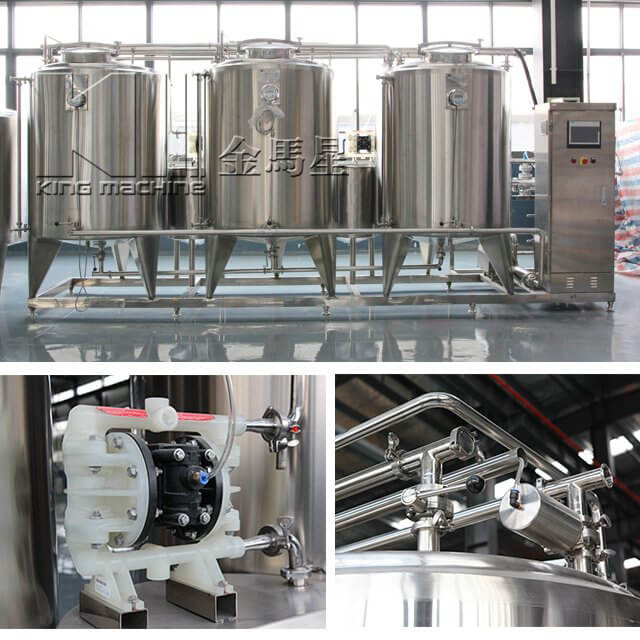
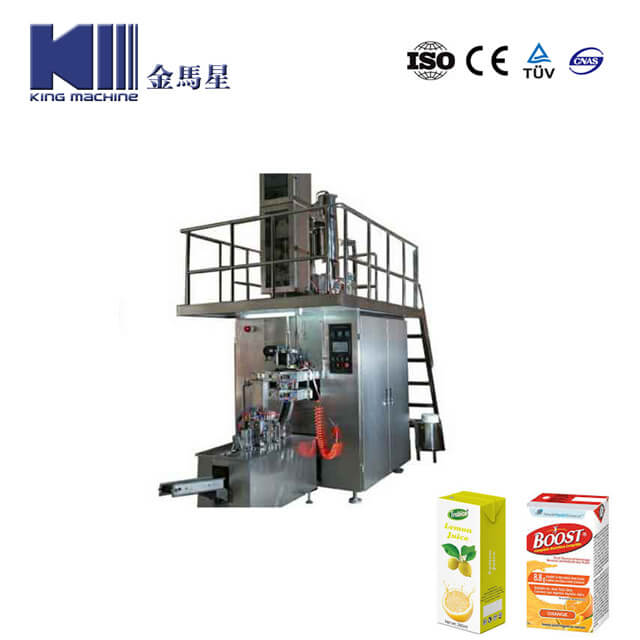
Cleanliness is essential in beverage production because the hygiene of a filling line directly affects product safety and brand reputation. A CIP (Cleaning-in-Place) system removes product residues, deposits, and microorganisms from beverage bottling systems without requiring extensive manual cleaning.
Before CIP systems became common, enclosed production equipment often had to be opened and cleaned manually, requiring significant time and labor. CIP made frequent internal cleaning more efficient by allowing pipes, tanks, containers, and filling equipment to be cleaned in place. However, an improper CIP procedure can leave residues, cause cross-contamination, or even damage equipment.
This article explains the main CIP cleaning steps, key operating parameters, common CIP chemicals, cleaning frequency, validation methods, and troubleshooting practices to help beverage manufacturers maintain effective and consistent hygiene.
1. What Is CIP?
How CIP Works
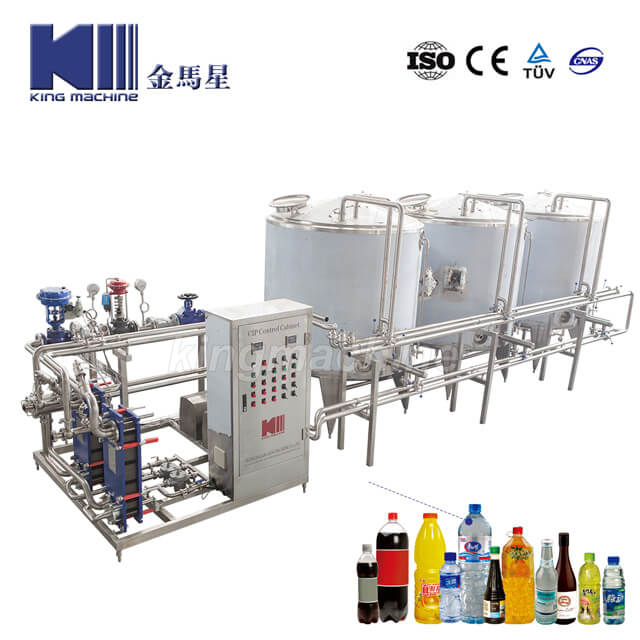
CIP (Clean-in-Place) is a cleaning method that removes product residues and contaminants from equipment without disassembly. It uses a controlled combination of water, chemicals, heat, and flow to clean internal surfaces.
CIP vs. COP
CIP is suited to large tanks, pipelines, and enclosed equipment that can be cleaned in place. COP (Clean-out-of-Place) requires components to be removed and cleaned separately, either manually or in a dedicated cleaning system. Many beverage plants use both methods for different equipment and components.
When CIP Is Used
CIP is commonly performed:
During product changeovers, especially between incompatible products
At scheduled intervals, based on production time and hygiene requirements
The required frequency varies by product and industry. CIP is widely used in beverage, dairy, brewing, food processing, pharmaceutical, and cosmetic production where strict hygiene is essential.
2. CIP Cleaning Procedure
A typical beverage filling equipment CIP cycle follows six stages. The exact settings should be adjusted according to the equipment, product residues, cleaning chemicals, and sanitation requirements.
Step | Medium | Concentration | Temperature | Time | Acceptance |
Pre-rinse | Drinking/hot water | — | Ambient-70℃ | 5-10 min | Clear discharge |
Caustic wash | NaOH | 1-2.5% | 70-90℃ | 20-30 min | Concentration/conductivity in range |
Intermediate rinse | Drinking water | — | Ambient-70℃ | 5-10 min | pH near inlet water |
Acid wash | HNO₃ | 0.5-1.5% | 60-80℃ | 15-20 min | Scheduled or as needed |
Sanitization | PAA/hot water/steam | 0.1-0.2% / — | ≥85℃ | 10-15 min | Sanitizer verified |
Final rinse | Treated water | — | Ambient | Until clear | No detectable residue |
The CIP cycle begins with a pre-rinse to remove loose residues and remaining product from the filling line.
This is followed by caustic washing, which breaks down organic contaminants such as sugars, fats, and proteins.
The intermediate rinse then removes the remaining alkaline solution from the equipment.
Acid washing is performed periodically to remove mineral deposits, scale, and alkaline residues that may build up on internal surfaces.
After the cleaning stages, sanitization reduces microorganisms and prepares the equipment for hygienic production.
The final rinse uses treated water to remove any remaining cleaning chemicals or sanitizer.
A complete CIP cycle should leave the equipment clean, free from detectable chemical residues, and ready for the next production run. The actual cleaning parameters should be adjusted according to the equipment, product, and sanitation requirements.
3. CIP System Types and Equipment
CIP systems can be classified according to how cleaning solutions are prepared and handled.
System Types
Single-Use / Type I: Uses fresh cleaning solutions for each cleaning cycle.
Reuse / Type II: Recovers and reuses cleaning solutions for multiple cycles, helping reduce water and chemical consumption.
Core Equipment
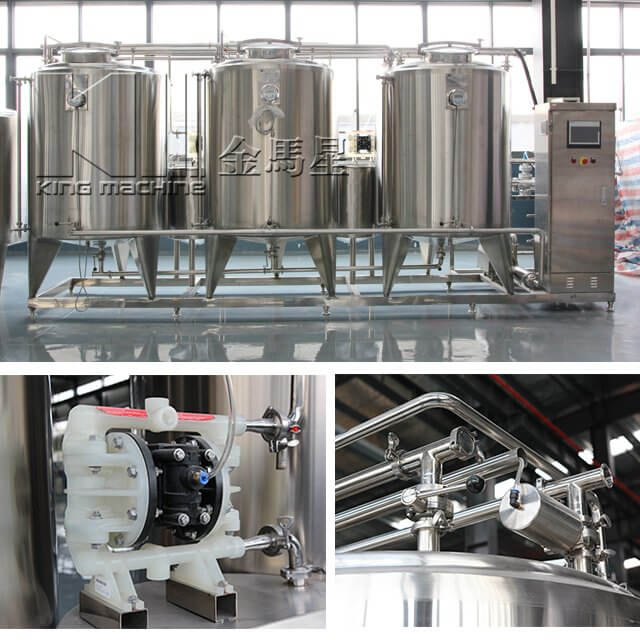
An automated CIP system typically consists of:
Storage tanks for acid, caustic solution, and hot water
Plate heat exchanger for heating cleaning solutions
Supply and return pumps for circulating cleaning liquids
Automatic pneumatic valves for controlling flow paths
pH and conductivity meters for monitoring cleaning conditions
Touchscreen control system for operating and managing CIP cycles
The combination of these components allows cleaning solutions to circulate through the required equipment while key operating conditions are monitored and controlled automatically.
4. CIP Cleaning Frequency
CIP frequency varies by industry and production conditions. The following values can be used as general reference ranges rather than fixed requirements.
Application | Reference Frequency | Main Consideration |
Dairy | Every 24-48 hours | High microbial risk |
Beverages | Every 1-3 days | Product type |
Sauces / Condiments | Every few days to 1 week | Heavy organic residues |
Product Changeover | Immediately | Incompatible products |
Actual cleaning schedules should be established based on product characteristics, equipment conditions, production time, and sanitation requirements. More frequent CIP may be necessary when products leave heavier residues or present higher contamination risks.
5. CIP Validation and Quality Control
CIP effectiveness should be verified through routine checks and documented monitoring to ensure consistent cleaning performance.
Verification
Visual inspection: Check whether the discharge is clear.
pH testing: Confirm that the intermediate rinse reaches the inlet-water range ±0.5.
Conductivity monitoring: Track changes in cleaning solution concentration.
ATP swab testing: Check surface cleanliness, with ≤150 RLU used as a typical reference limit.
Titration: Verify acid and caustic solution concentration.
Process Monitoring
Temperature, time, conductivity, and flow rate should be monitored during CIP cycles. Spray ball coverage can be verified annually using a riboflavin test.
Records
Keep CIP cycle records, ATP results, titration results, and deviation reports for traceability. Record retention should follow the applicable quality system, with two years or shelf life plus one year often used as a reference.
6. Common Deviations and Troubleshooting
CIP deviations should be identified promptly and corrected before the filling line returns to production. Common issues and recommended actions include:
Issue | Possible Cause | Corrective Action |
Temperature below target | Insufficient steam supply | Check steam supply and rerun the step; never shorten cleaning time manually |
Conductivity does not return to baseline | Cleaning solution residue | Extend final rinsing in 5-minute increments; check dosing pump if recurring |
ATP result exceeds limit | Inadequate sanitation | Re-sanitize and repeat ATP testing; review CIP validation after three consecutive failures |
Filling valve cleaning | Poor valve sealing | Install cleaning dummy cups and keep them in place until the CIP cycle is complete |
For filling valve cleaning, the dummy cups seal the valve outlets so that cleaning solution can circulate through the filling machine and related equipment. They should only be removed after the entire CIP program has finished.
Conclusion
CIP is an essential part of beverage filling line hygiene. A complete CIP cycle typically includes pre-rinsing, caustic washing, intermediate rinsing, acid washing, sanitization, and final rinsing. Effective cleaning also depends on four key factors: temperature, time, mechanical action, and chemical concentration. Proper CIP operation and validation help maintain product safety, prevent contamination, and protect brand reputation.
With more than 20 years of PET packaging experience, King Machineprovides fully automatic CIP systems for beverage production and filling lines, trusted by customers worldwide. Share your production line specifications and cleaning requirements, and contact King Machine for a custom CIP solution and free consultation.