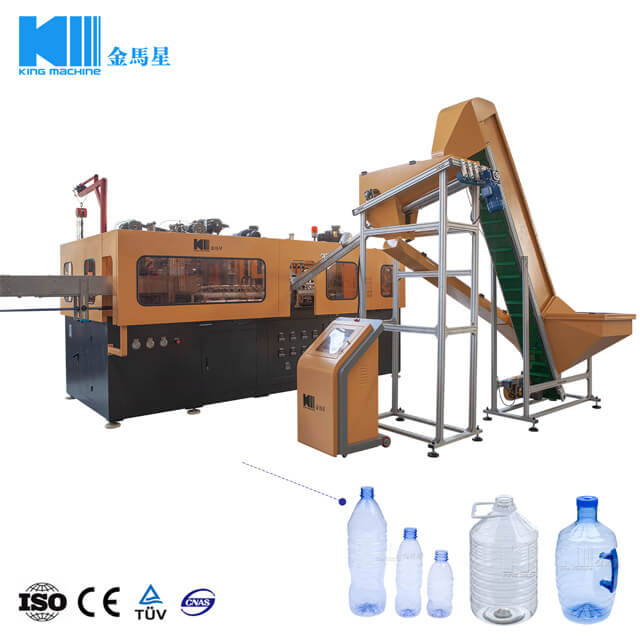
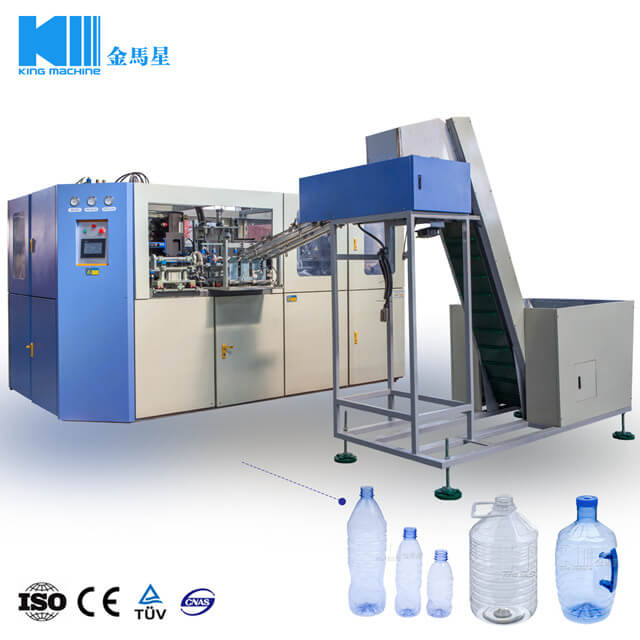
From mineral water bottles and carbonated drink bottles to cooking oil containers, blow molded products are part of everyday life. Among the materials used for these containers, PET (Polyethylene Terephthalate) is one of the most widely used thermoplastics, offering the transparency, strength, and lightweight properties needed for modern beverage packaging.
For water and beverage manufacturers, however, the bottle itself is only one part of the process. Many buyers focus on the filling machine while overlooking bottle blowing, even though it is an important starting point of the production line. The quality and consistency of blown bottles can directly affect filling efficiency, capping, conveying, and final product quality.
This article explains how PET bottles are made through blow molding, covering the complete process from preform to finished bottle. It also compares EBM, IBM, and ISBM and explains how to choose the right technology for different applications.
1. What Is Blow Molding?
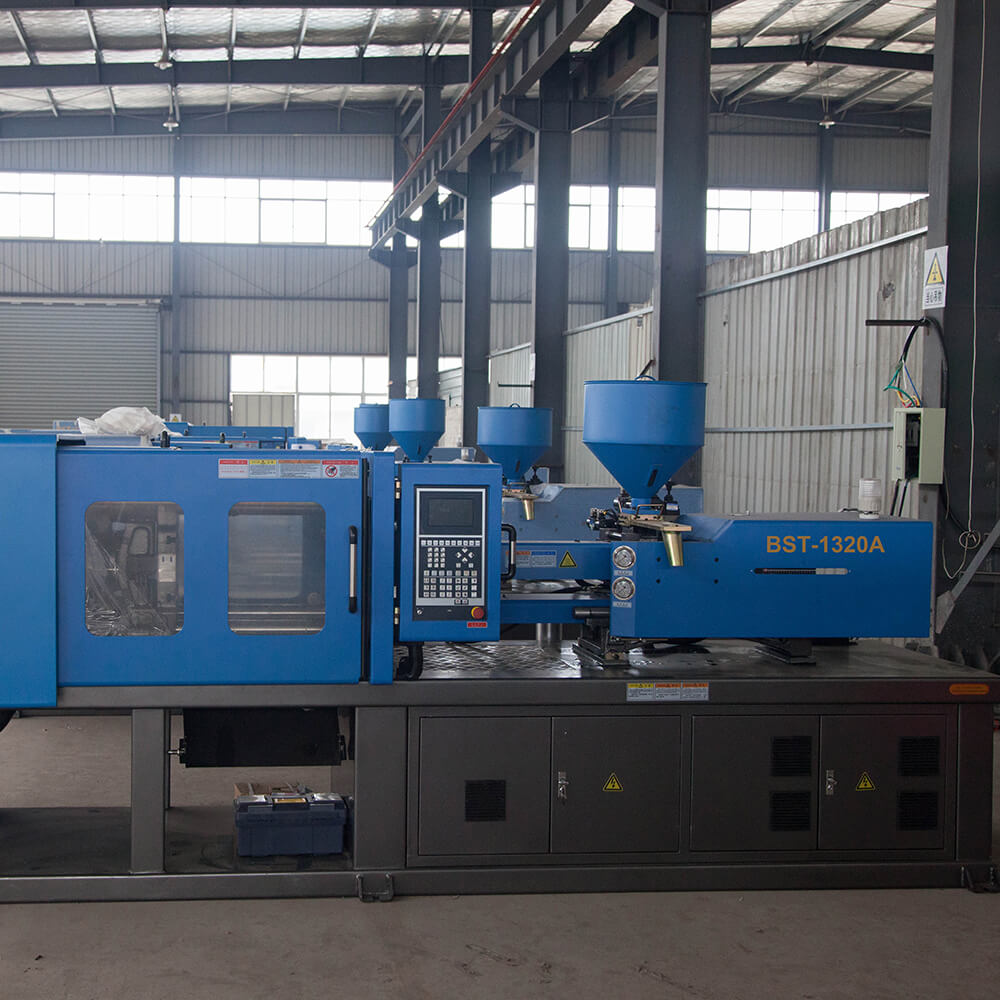
Blow molding is a manufacturing process used to form hollow plastic parts. Air pressure inflates softened plastic inside a mold cavity, allowing it to take the desired shape. The technology originated in the glass industry, while modern plastic blow molding has existed since 1938, when American inventors Enoch Ferngren and William Kopitke patented equipment for forming hollow products from organic plastic materials.
Blow molding is essentially a two-part process. First, a parison or preform is produced as the starting shape. Then, compressed air expands it against the mold walls to create the final product. The process is widely used for bottles, carbonated and soft drink containers, cooking oil bottles, chemical containers, and personal care packaging. PET and PETE refer to the same material: Polyethylene Terephthalate.
2. Three Types of Blow Molding
2.1 Extrusion Blow Molding
EBM is the simplest and lowest-cost method. Molten plastic is extruded into a hollow parison, the mold closes around it, and compressed air inflates it against the mold cavity. After cooling, the part is ejected and excess material is removed.
Materials: PE, nylon
Advantages: Low tooling cost; suitable for very large products
Applications: Industrial drums, fuel tanks, large containers
2.2 Injection Blow Molding
IBM combines injection molding and blow molding. Molten polymer is injected around a core pin to form a preform with its bottle neck, then transferred to a blow mold and inflated with compressed air. It offers better dimensional accuracy and is suitable for complex, small containers.
Advantages: Precise necks and shapes
Applications: Pharmaceutical and cosmetic bottles
Limitations: Higher tooling cost and longer cycles than EBM
2.3 Injection Stretch Blow Molding
ISBM is the most common process for PET bottles. After injection, the preform is heated, stretched longitudinally with a stretch rod, and blown outward with compressed air. Stretching improves PET's mechanical strength and barrier performance.
Applications: Water, CSD, cooking oil, and personal care bottles
Limitations: Highest tooling cost among the three methods
3. Blow Molding Comparison
The three blow molding methods differ mainly in how the starting form is produced and how the final container is shaped. The table below summarizes their key differences, helping manufacturers identify the most suitable process for their products.
Feature | EBM | IBM | ISBM |
Starting form | Parison | Preform | Preform |
Stretching | No | No | Longitudinal |
Typical materials | PE, PP, nylon | HDPE, LDPE, PP | PET |
Product complexity | Low | Medium | High |
Size range | Very large | Small–medium | Small–medium |
Tooling cost | Low | Medium | High |
Unit cost | Low | Medium | Higher |
Wall thickness | Average | Good | Excellent |
Transparency & strength | Average | Good | Excellent |
Typical products | Drums, tanks, shampoo bottles | Pharma, cosmetic bottles | Water, CSD, oil bottles |
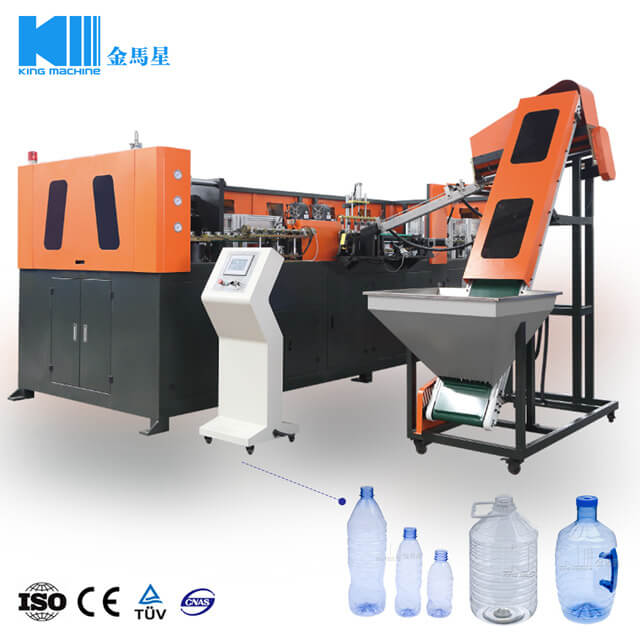
4. PET Bottle Blow Molding Process
The ISBM process turns PET resin into finished bottles through a series of controlled steps. Each stage affects the final bottle quality and production efficiency.
Step 1: Resin Drying
PET resin is dried to remove moisture. Excess moisture can cause hydrolysis during heating, reducing bottle strength and clarity.
Step 2: Preform Injection
The dried resin is melted and injected into a preform mold. The core pin forms the inner diameter, while the cavity shapes the outside.
Step 3: Cooling & Storage
The preforms are cooled and removed for storage or transport before blowing.
Step 4: Preform Heating
Preforms are evenly heated to about 100℃, preparing them for stretching.
Step 5: Stretch & Blow
A stretch rod elongates each preform while high-pressure air expands it into the mold cavity.
Step 6: Cooling
The bottle cools evenly inside the mold to maintain its shape.
Step 7: Inspection
Finished bottles are demolded, leak-tested, visually inspected, and conveyed onward.
Step 8: Filling
The bottles enter the filling line for water or beverage filling, connecting the blowing process with filling equipment.
5. How Blow Molding Affects Line Performance
Blow molding directly affects the efficiency and stability of the filling line. Both bottle supply and bottle quality need to meet downstream requirements.
Match Capacity
Blowing capacity should match or exceed filling demand. A 12,000 BPH filling line needs sufficient blowing capacity to maintain a continuous bottle supply. Otherwise, bottle shortages can cause frequent filling machine stops.
Ensure Bottle Quality
Bottle quality affects several downstream processes. Accurate neck dimensions support reliable capping, uniform wall thickness improves conveying stability, and good bottle verticality helps ensure accurate filling and labeling.
Connect the Processes
Blow molding, filling, and packaging should be properly matched in capacity and operating speed. This helps prevent production bottlenecks, reduces unnecessary bottle handling, and keeps the entire line running more consistently.
6. Choosing the Right Blow Molding Process
The right process depends on the container, material, production requirements, and budget. Use the following guide to quickly identify the most suitable option.
Process | Choose It When | Typical Applications |
EBM | 5L+ containers; PE/PP; lower detail and clarity requirements; limited budget | Large containers, industrial packaging |
IBM | Small precision bottles; HDPE/LDPE/PP; tight neck tolerances | Pharmaceutical, cosmetic packaging |
ISBM | PET; high clarity, strength and barrier performance; mass production | Water and CSD bottles |
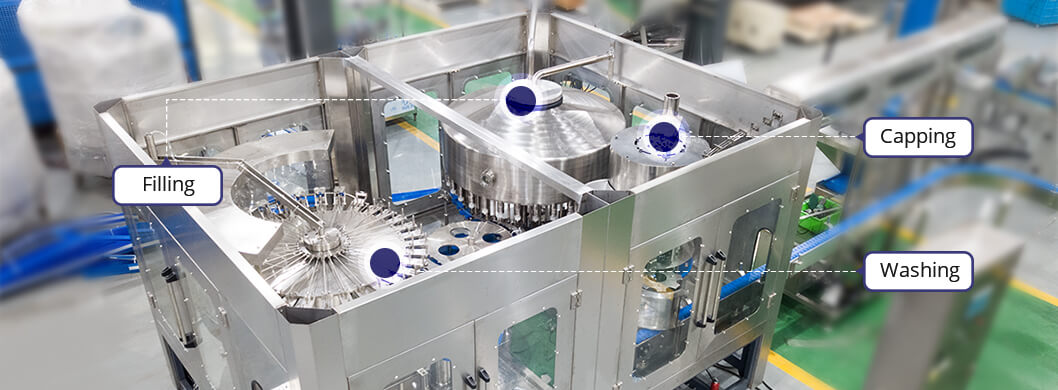
For most PET water and beverage lines, ISBM is the preferred choice because it combines stretching with blow molding to produce lightweight, strong containers. Blow-Fill-Cap Combiblock systems also use ISBM to connect bottle production with filling and capping in one integrated process.
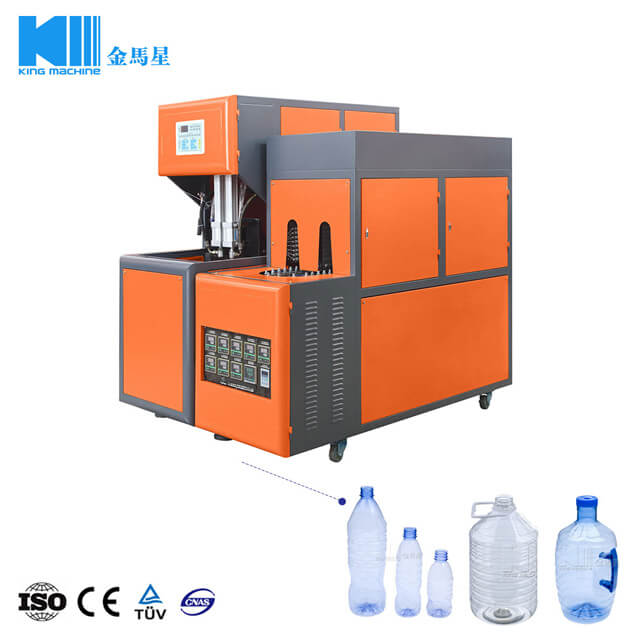
Conclusion
PET blow molding is a key starting point for water and beverage production, and the right process directly affects bottle quality and line efficiency. For PET bottles, ISBM offers excellent clarity, strength, and barrier performance, while Blow-Fill-Cap Combiblock technology integrates bottle blowing, filling, and capping for a more efficient production process.
With more than 20 years of PET packaging experience, King Machine provides integrated blow molding and filling solutions for customers worldwide. Share your bottle size, target capacity, and packaging requirements with our team to get a customized solution. Contact King Machine today for a free consultation and explore our products and successful projects.