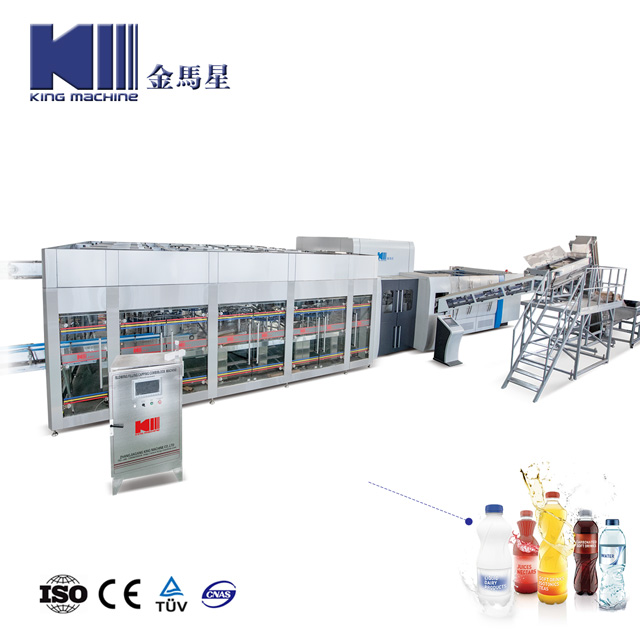
Choosing the right capacity for a water filling line can be challenging. A line with insufficient output may become a bottleneck as demand grows, while excessive capacity can tie up capital in equipment that is not fully utilized.
Capacity selection is therefore one of the most important decisions when setting up a water bottling plant. The wrong choice can affect production efficiency, extend the investment payback period, and increase operating costs. Buyers need to balance current demand with available space, investment, and future growth.
This article compares 3,000 BPH, 12,000 BPH, and 24,000 BPH water filling lines, covering their typical applications, equipment configurations, and investment ranges. It also provides practical guidance to help you identify the capacity that best fits your business.
1. BPH Basics
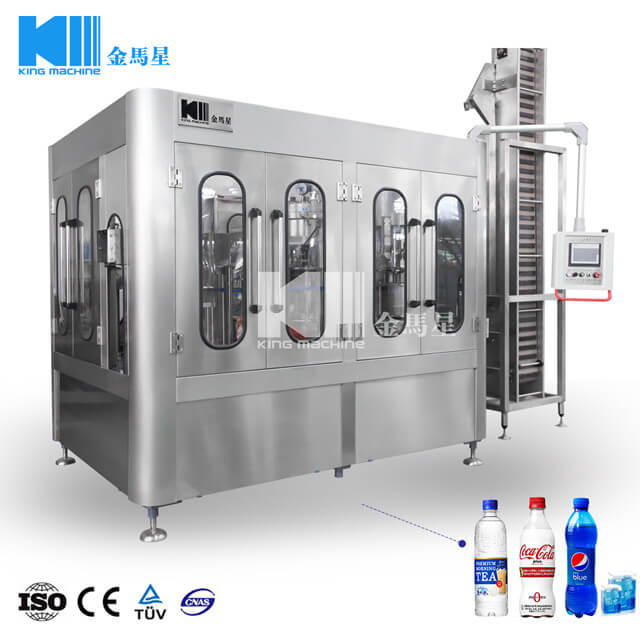
BPH stands for bottles per hour, indicating how many bottles a water filling equipment can produce in one hour.
Rated BPH: The speed a machine can achieve under ideal operating conditions.
Actual BPH: The real output after accounting for line efficiency.
Actual BPH = Rated BPH×Line Efficiency
In real production, most water bottling machines operate at around 75%-85% of their stated capacity.
Typical efficiency levels include:
Bottle Size Matters
Bottle size directly affects actual output. A machine rated at 12,000 BPH with 500 ml bottles may not reach the same speed when producing 1.5 L bottles.
2. Capacity Comparison
The three capacity levels represent different stages of business development. The comparison below provides a quick reference for evaluating production scale, investment requirements, staffing, space, and expected payback.
Item | 3,000 BPH | 12,000 BPH | 24,000 BPH |
Scale | Startup / local | Small plant / regional | Large plant / national |
Daily output* | ~20,400 bottles | ~81,600 bottles | ~163,200 bottles |
Line type | Small 3-in-1 | Automatic | High-speed integrated |
Filling heads | 8-12 | 18-32 | 40-60 |
Equipment cost | $90k-180k | $200k-400k | $500k-1m+ |
Operators | 1-2 | 2-4 | 4-6 |
Factory area | 200-500 m² | 500-1,500 m² | 2,000 m²+ |
Payback | 12-18 months | 10-14 months | 12-24 months |
*Daily output assumes 8 hours at 85% efficiency. Investment figures are market reference ranges. Actual costs vary by configuration, brand, and region.
3. 3,000 BPH Line
Applications
A 3,000 BPH water filling line is suitable for small-scale and startup operations, such as local bottled water brands and small plants serving nearby markets. With an estimated daily output of around 20,000 bottles, it fits businesses with limited initial demand.
Equipment
A typical line includes an RO/UF water treatment system, a 3-in-1 rinsing, filling, and capping machine, labeling and coding machines, a conveyor system, and an optional shrink wrapper. This configuration covers the main processes from treated water to finished packaged bottles.
Output & Investment
At 85% efficiency, the estimated output is 3,000×8×85% = 20,400 bottles/day. Its main advantages are lower investment, a smaller footprint, easier installation and commissioning, and a staffing requirement of only 1-2 operators. The primary limitation of the equipment is its relatively low production capacity, which could become a bottleneck hindering development as market demand grows.
4. 12,000 BPH Filling Line
Applications
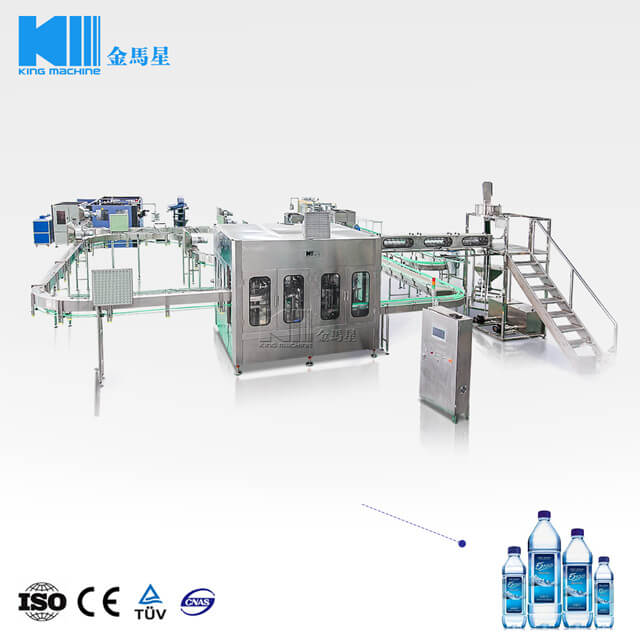
A 12,000 BPH water filling line suits small water plants, mid-scale regional brands, and growing beverage businesses with stable demand. It provides the capacity needed for larger commercial production without the investment of a high-speed industrial line.
Configuration
A typical line includes water treatment, PET bottle blowing, a 3-in-1 rinsing-filling-capping machine, automatic cap sorting, labeling, coding, visual inspection, shrink wrapping, and conveyors.
Output & Cost
At 85% efficiency, 12,000 BPH produces about 102,000 bottles in 10 hours. The line offers high automation and balanced capacity, but requires more skilled operation and maintenance than smaller systems.
5. 24,000 BPH Filling Line
Applications
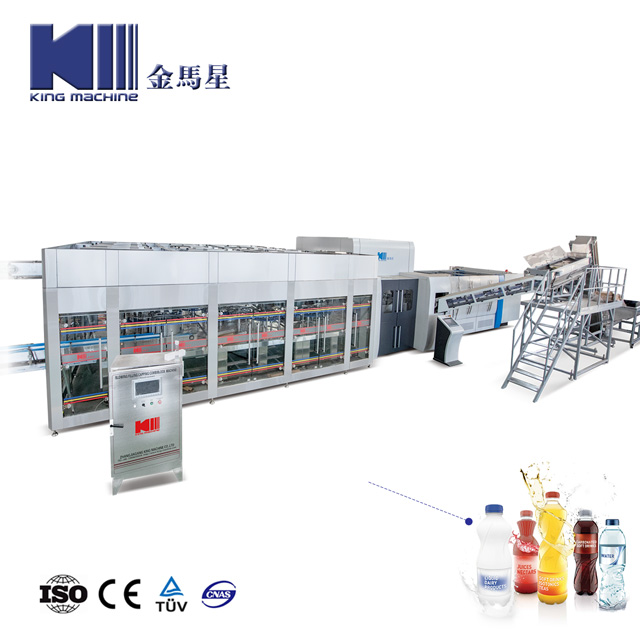
A 24,000 BPH water filling line suits large beverage plants, industrial-scale bottling, and businesses with stable sales channels and nationwide distribution networks. It is designed for high-volume production where consistent output is essential.
Configuration
A typical line includes large-scale water treatment, multi-cavity PET bottle blowing, a high-speed blowing-filling-capping Combiblock, automatic cap sorting and sterilization, high-speed labeling, coding and visual inspection, automated shrink wrapping and case packing, robotic palletizing, and centralized control with CIP cleaning.
Output & Cost
At 85% efficiency, 24,000 BPH produces about 204,000 bottles in 10 hours. The line offers high automation and lower unit costs, but requires greater space, investment, and maintenance. If demand is insufficient, unused capacity can increase operating costs.
6. How to Choose the Right Capacity
When selecting a suitable filling production line, you should first determine your daily output target, and then comprehensively consider operating hours, production efficiency, future business growth, and the entire production process.
Calculate BPH
Use this formula to estimate the required rated capacity:
Required BPH = Daily production target÷Working hours÷Estimated efficiency
Daily Target | Hours | Efficiency | Required BPH |
20,000 bottles | 8 h | 80% | 3,125 |
50,000 bottles | 8 h | 80% | 7,812 |
100,000 bottles | 10 h | 85% | 11,765 |
200,000 bottles | 12 h | 85% | 19,608 |
Match Your Business
Business Situation | Recommended Capacity | Main Reason |
Startup, limited budget | 3,000 BPH | Lower entry investment |
Regional brand, steady growth | 12,000 BPH | Balanced capacity and cost |
National distribution, high demand | 24,000 BPH | Higher output and scale |
A practical capacity decision should also include:
Growth: Keep a 20-30% capacity buffer and consider your three-year production plan.
Line balance: Actual output is limited by the slowest machine, so filling, labeling, packaging, and other stages must be properly matched.
Bottle size: Larger bottles generally reduce achievable BPH. Confirm the rated capacity for every bottle format you plan to produce.
Conclusion
Choosing a water filling line is not simply about selecting the highest or lowest BPH. The right capacity should match your current production needs, available investment, operating conditions, and future growth. A 3,000 BPH line is suitable for startups and local markets, while 12,000 BPH offers a balanced capacity for growing regional brands. For large-scale production and nationwide distribution, 24,000 BPH provides the output needed to support higher demand and economies of scale.
With over 20 years of industry experience, King Machine not only manufactures equipment with a wide production capacity range (from 3,000 to 54,000 BPH) but also provides turnkey solutions covering water treatment, bottle blowing, filling, and packaging. Share your bottle size, target output, factory layout, and growth plan with our team to receive a customized capacity recommendation and quotation. Contact King Machine today for a free consultation.