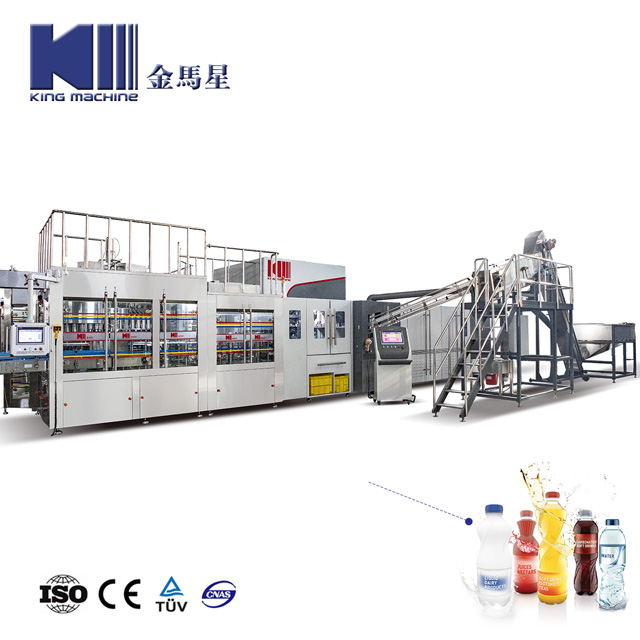
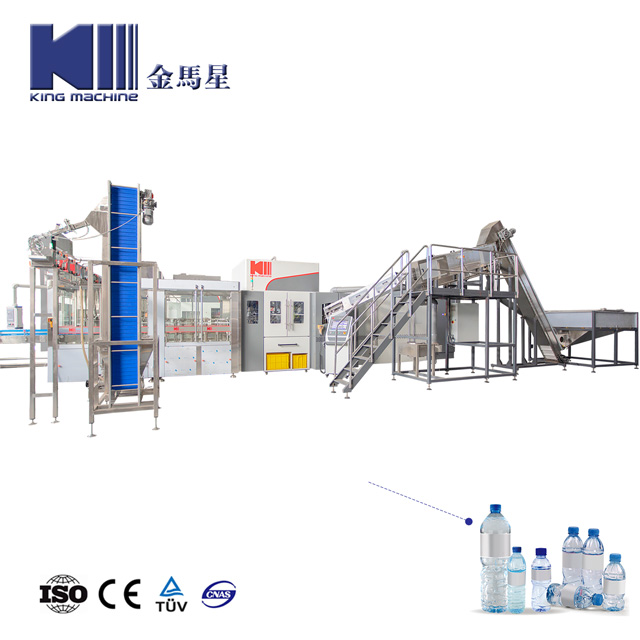
When choosing equipment for a bottled water plant, buyers may encounter terms such as “monoblock”, “combiblock”, and “3-in-1 filling machine”. Because suppliers may use these terms differently, it can be difficult to understand what processes a machine actually integrates and how the systems differ.
This confusion can lead to practical problems. Assuming a combiblock is a complete production line, for example, may result in an inaccurate budget, inefficient factory layout, or missing equipment during installation. The key is to look beyond the machine name and understand its actual process configuration.
This article compares monoblock and combiblock systems, explains their typical configurations and key differences, and examines how they affect plant layout, flexibility, operating costs, and investment decisions. It also provides practical guidance for selecting the right system for different bottled water production needs.
1. What Is a Monoblock Filling Machine?
A monoblock filling machine is a compact packaging system that combines multiple production stages within one machine frame. Its configuration varies according to the product, container, and required processes.
Monoblock Types
Type | Integrated Processes | Typical Applications |
2-in-1 | Filling+Capping | Edible oil, sauces, detergents, shampoo, chemicals |
3-in-1 | Rinsing+Filling+Capping | Bottled water, juice, tea beverages |
4-in-1 | Rinsing+Filling+Capping+Extra Process | Beverages, dairy, pharmaceuticals, cosmetics |
5-in-1 | Cleaning+Filling+Stoppering+Capping+Sealing | Oral liquids, eye drops, perfume, small bottles |
Customized | Flexible process combination | Special bottles, caps, or liquids |
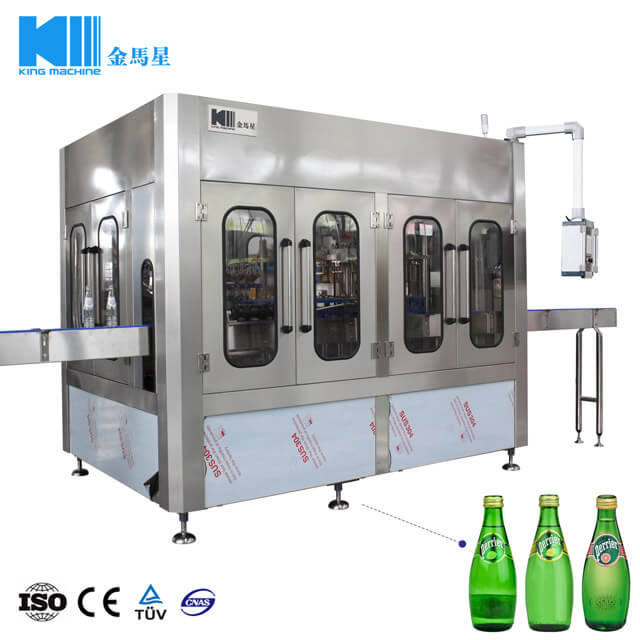
The number in a monoblock name indicates how many processes are integrated. For bottled water production, the 3-in-1 configuration is especially common. It normally works with finished empty bottles. Bottle blowing remains a separate process, or the plant can purchase ready-made PET bottles.
2. What Is a Combiblock Machine?
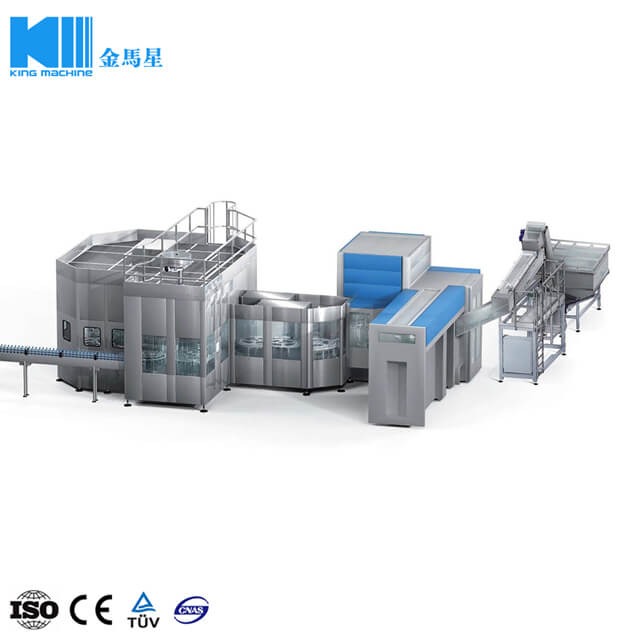
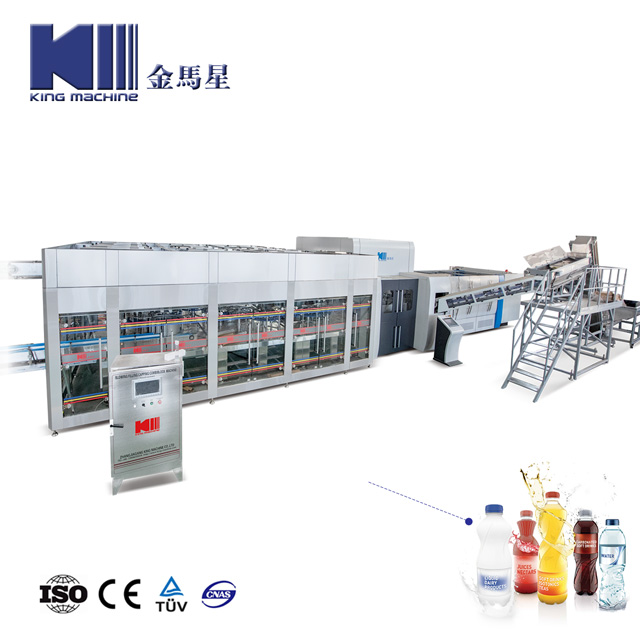
A combiblock machine is an integrated system that combines several key production steps into one synchronized unit. In PET bottled water production, it can integrate bottle blowing, filling, and capping to streamline the production flow.
Combiblock Types:
Blow-Fill-Cap Combiblock: Starts with PET preforms and synchronizes bottle blowing, filling, and capping in one system. This reduces empty-bottle conveying, accumulation, and storage between processes.
Rinser-Filler-Capper Combiblock: Starts with finished empty bottles and combines rinsing, filling, and capping. This configuration is also commonly called a monoblock or 3-in-1 water filling machine.
A combiblock is a core machine module, not necessarily a complete production line. A full line may also require water treatment, labeling, coding, packaging, conveying, and inspection equipment.
3. Monoblock vs Combiblock
The main difference lies in where the production process starts and how much equipment is integrated. The table below compares a typical 3-in-1 monoblock with a Blow-Fill-Cap combiblock.
Feature | Monoblock 3-in-1 | Blow-Fill-Cap Combiblock |
Starting point | Empty PET bottles | PET preforms |
Main processes | Rinsing+Filling+Capping | Blowing+Filling+Capping |
Bottle blowing | Separate | Integrated |
Bottle conveying | Required | Greatly reduced |
Bottle source | Purchased or blown separately | Made from preforms |
Integration | High | Higher |
Space requirement | Compact | More compact |
Water use | Includes bottle rinsing | No separate bottle rinsing |
Energy efficiency | Depends on configuration | Can improve with integrated operation |
Best suited for | Flexible or existing plants | Highly automated PET plants |
The right choice depends on production scale, bottle requirements, available space, and existing equipment. Neither system is automatically better for every plant.
4. Six Key Differences
4.1 Integration
A 3-in-1 monoblock combines rinsing, filling, and capping. A Blow-Fill-Cap (BFC) combiblock integrates blowing, filling, and capping, covering the process from preform to filled bottle. Some advanced systems may also integrate labeling.
4.2 Footprint & Layout
BFC systems can reduce the space required for separate blowing and filling equipment by eliminating intermediate bottle conveyors and buffers. A monoblock still requires separate bottle blowing and empty-bottle handling.
4.3 Energy & Operating Cost
BFC can reduce energy used for empty-bottle conveying and avoid separate bottle-rinsing water. Its operating cost depends on capacity, configuration, utilities, and automation level.
4.4 Hygiene & Quality
Fewer intermediate handling steps can reduce exposure to dust, bottle deformation, jams, and contamination. Monoblock systems involve additional empty-bottle conveying between blowing and filling.
4.5 Flexibility & Changeover
Monoblocks can be practical for plants handling multiple bottle formats or smaller batches. BFC systems can offer efficient changeovers but require suitable preform and blowing molds.
4.6 Investment
BFC usually requires higher initial investment but can reduce equipment, conveying, space, and operating costs. Monoblocks generally offer a lower entry cost and suit plants with limited budgets or existing bottle supplies.
5. How to Choose?
The right system depends on your production goals, existing equipment, bottle formats, and investment plan.
Choose a Combiblock When
Building a new PET bottled water plant with a defined capacity.
Producing relatively standardized bottle formats, such as 330ml, 500ml, 1L, or 1.5L.
Factory space is limited and a compact layout is preferred.
High automation and stable production are priorities.
Long-term savings in energy, labor, and water are important.
Choose a 3-in-1 Monoblock When
Empty bottles are already available or produced separately.
Initial investment needs to be controlled.
Multiple bottle formats require greater flexibility.
Production will be expanded through phased investment.
Choose Other Monoblocks When
2-in-1: Suitable for products such as edible oil, sauces, and detergents that do not require bottle rinsing.
4-in-1 or 5-in-1: Suitable for applications requiring additional processes, such as stoppering, sealing, or other specialized functions.
Rather than choosing by capacity alone, evaluate the complete production process and future expansion plans.
Conclusion
Monoblock and combiblock systems serve different production needs, and neither is automatically the better choice. A monoblock typically integrates selected filling processes, while a Blow-Fill-Cap combiblock extends integration from PET preforms to finished bottles. The right solution depends on bottle format, production capacity, factory space, budget, and future expansion plans. Before making a decision, confirm exactly which processes and supporting equipment are included in the supplier's quotation.
With 20+ years of PET packaging experience, 1,000+ beverage filling lines delivered to 90+ countries, King Machine provides both monoblock and combiblock solutions, as well as complete water treatment, filling, and packaging systems. Share your bottle size, target capacity, factory layout, and packaging requirements with our team. Contact King Machine for a customized solution, consultation, and quotation.