Oxygen pickup in can filling is a critical factor that directly affects beverage shelf life, flavor stability, and overall product quality. Controlling both dissolved oxygen (DO) and headspace oxygen (HPO) is essential for maintaining consistent packaging performance in modern beverage production.
Oxygen can be introduced at multiple stages of the can filling process, including empty can handling, filling, and seaming. Even small amounts of air exposure can lead to oxidation issues, especially in beer, carbonated soft drinks, and RTD beverages filled on a carbonated can filling machine or similar systems designed for pressurized products.
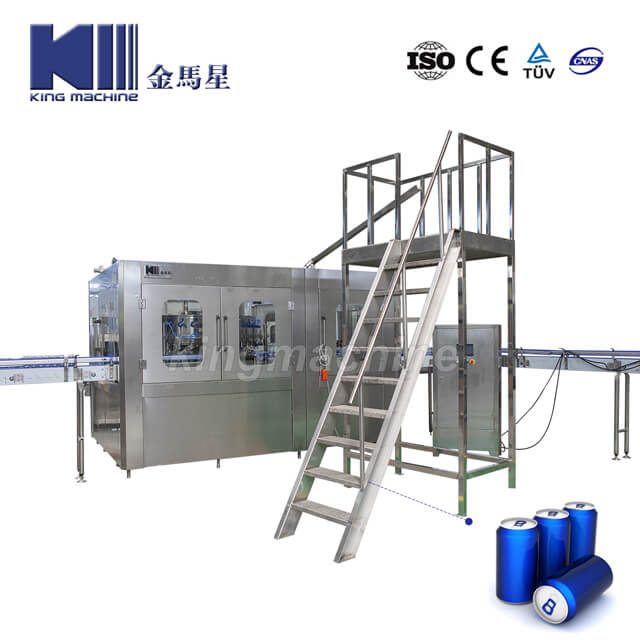
To minimize oxygen exposure, modern counter-pressure filling systems are widely used. Advanced can filling equipment, such as those developed by King Machine, reduces oxygen ingress through precise pressure control and CO2 purging technology.
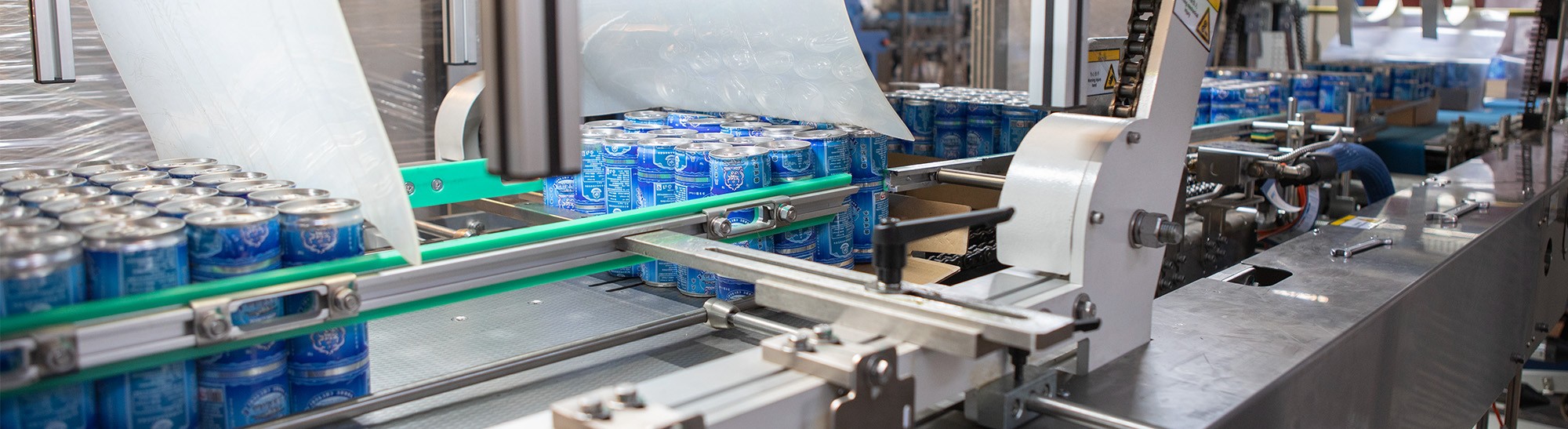
1. Where Oxygen Enters During Can Filling
Empty can stage
Empty cans contain ambient air before filling, making this a key source of oxygen contamination. Insufficient CO2 flushing or vacuum treatment can leave residual oxygen inside the can, increasing oxidation risk in the final product.
Filling stage
During filling, liquid turbulence and pressure imbalance can introduce air bubbles and cause gas exchange. Foam formation further increases oxygen dissolution, reducing product stability in juice or carbonated products processed on a juice can filling machine.
Seaming stage
Delays before sealing and poor seam integrity can allow additional oxygen ingress after filling. At this stage, headspace oxygen becomes a major contributor to total package oxygen (TPO), directly impacting shelf life and product quality.
2. Core Principles to Minimize Oxygen Pickup in Can Filling Systems
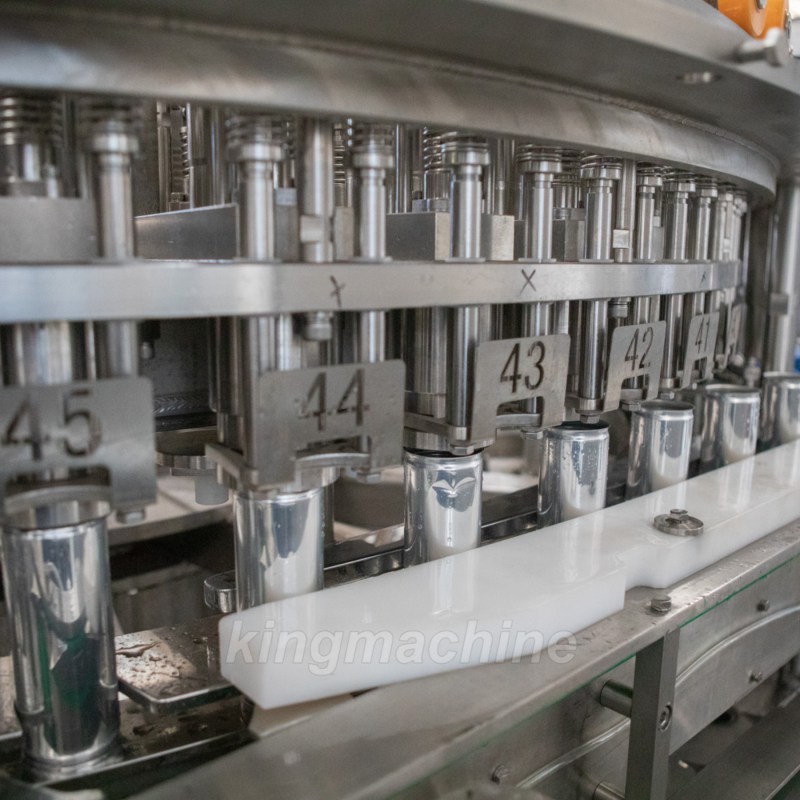
Counter-pressure (isobaric) filling technology: Counter-pressure filling maintains equal pressure between the product tank and the can, preventing air ingress during filling. It also reduces turbulence, helping to minimize foam formation and oxygen dissolution in modern beverage can filling machine systems.
Vacuum and CO2 pre-evacuation: Before filling, cans are vacuumed and flushed with CO2 to remove ambient air. This significantly reduces initial oxygen levels by replacing air with inert gas.
Laminar flow filling design: Laminar flow ensures smooth, non-turbulent filling, reducing air entrainment and foam generation while improving overall filling stability.
Integrated filling and seaming system: Integrating filling and sealing shortens transfer time between processes, reduces exposure to air, and improves overall sealing efficiency.
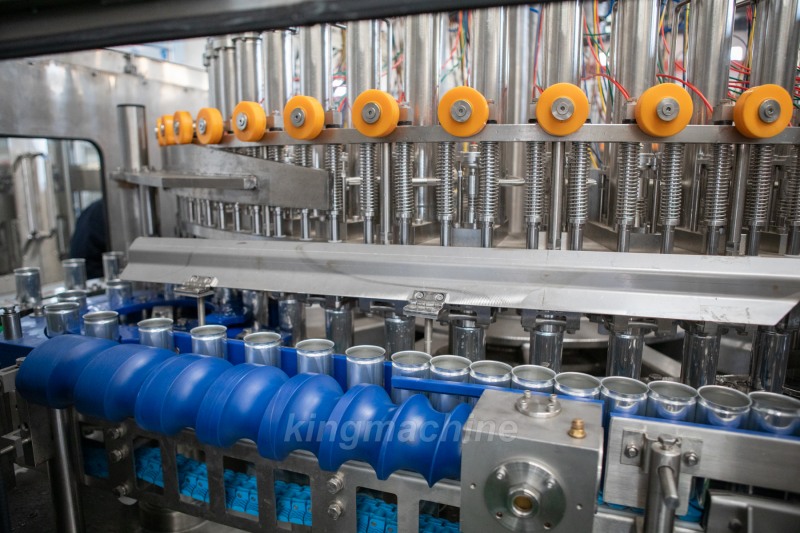
3. Key Engineering Solutions in Modern Can Filling Machines
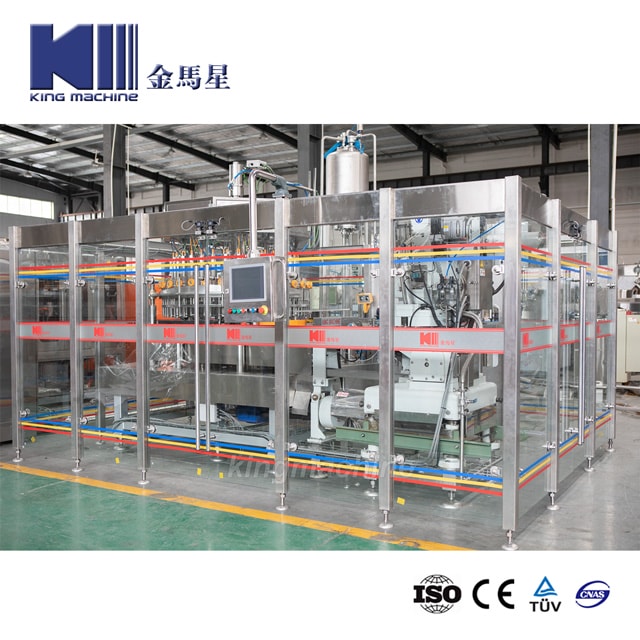
Closed-loop pressure control system: Real-time pressure monitoring maintains a stable CO2 environment during filling, reducing pressure fluctuations and oxygen ingress risk.
High-precision filling valves: Designed for stable flow with anti-foam and anti-drip performance, helping reduce turbulence and oxygen pickup.
CO2 or nitrogen purging systems: Empty cans are flushed with inert gas before filling, replacing air and significantly lowering residual oxygen.
Monoblock filler and seamer configuration: Integrating filling and sealing reduces transfer time and air exposure, improving overall oxygen control.
 4. Operational Factors Affecting Oxygen Pickup
Operational conditions also have a direct impact on oxygen pickup during can filling, alongside equipment design. Key parameters such as temperature, foam control, line speed, and equipment condition all influence dissolved oxygen (DO) and total package oxygen (TPO) levels.
Operational Factor | Key Impact on Oxygen Pickup | Optimization Strategy |
Temperature control | Affects CO2 retention and gas stability | Use cold filling to reduce CO2 loss and stabilize dissolved gases |
Foam control | Foam increases oxygen exposure and dissolution | Apply fill-on-foam and manage foam cap effectively |
Line speed | Imbalance affects exposure time and stability | Optimize speed to balance efficiency and stability |
Equipment maintenance | Worn parts increase air leakage risk | Regular cleaning and replacement of seals/valves |
Oxygen control depends on both equipment and operation, especially in integrated can production line systems.
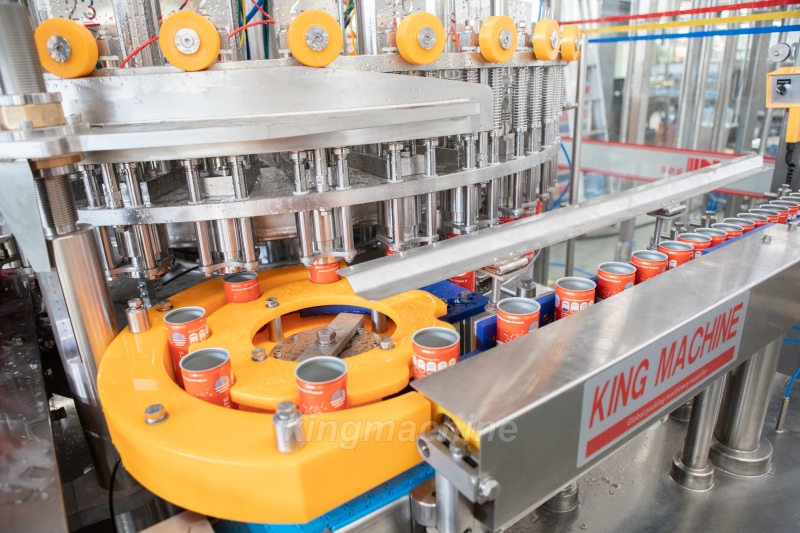
5. Oxygen Measurement and Quality Control in Can Filling
Oxygen control in can filling is achieved through both accurate measurement and strict process control. Beverage manufacturers rely on key oxygen indicators to monitor filling quality and ensure product stability throughout production.
Dissolved Oxygen (DO)
Dissolved Oxygen (DO) measures the oxygen present in the liquid product. It is continuously monitored as a key quality control parameter, helping operators identify oxygen ingress during the filling process and adjust filling conditions in real time.
Total Package Oxygen (TPO)
Total Package Oxygen (TPO), which combines dissolved oxygen and headspace oxygen, is used as a comprehensive indicator of packaging quality. It is widely applied in quality control systems to evaluate shelf life stability and overall filling performance.
Headspace oxygen control
Headspace oxygen is strictly controlled because it directly affects post-filling oxidation. Quality control is achieved through precise sealing, CO2 or nitrogen blanketing, and optimized filling conditions to minimize oxygen after closure.
6. Best Practices to Reduce Oxygen in Can Filling Lines
Reducing oxygen in can filling lines requires consistent control of both process conditions and filling environment. Key practices include CO2 pre-evacuation of empty cans, maintaining stable counter-pressure during filling, and keeping beverage temperature low to minimize CO2 loss. In addition, reducing the time between filling and seaming, using nitrogen or CO2 blanketing in storage tanks, and ensuring precise seam control all help limit oxygen exposure throughout the production process.
Overall, effective oxygen control depends on a fully coordinated filling line, where inert gas protection, stable operating conditions, and accurate sealing work together to minimize oxygen pickup. These measures collectively improve beverage stability, shelf life, and overall packaging quality.
7. Conclusion
Reducing oxygen pickup in can filling is essential for maintaining beverage quality, flavor stability, and shelf life, as oxygen can enter at multiple stages of the filling and sealing process.
Modern counter-pressure filling systems combined with CO2 purging, vacuum pre-evacuation, and precise seaming technology effectively minimize oxygen contamination across the entire production line. For stable low-oxygen performance, advanced solutions such as those developed by King Machine integrate pressure control and inert gas protection to help reduce DO and TPO while improving overall beverage quality.