News
Site Editor
 Site
/uploads/image/694e24f48271f.png
Learn how RO water treatment works, what contaminants it removes, its main treatment stages, and how it supports water quality in beverage production.
What Is RO Water Treatment?
Views: 86
Author: Site Editor
Publish Time: 2026-11-16
Origin: Site
Water quality is essential in drinking water production and beverage manufacturing. Before water enters a bottled water filling machine or becomes an ingredient in a beverage, it may need treatment to remove unwanted substances and achieve consistent quality.
Reverse osmosis (RO) water treatment is a widely used purification method. It applies pressure to push water through a semi-permeable membrane, separating water molecules from dissolved salts, minerals, and other impurities.
But how does this process work, and what can it remove? This article explains the definition, operating principles, treatment stages, contaminant removal capabilities, and practical applications of RO water treatment.

1. What Is RO Water Treatment?
Reverse osmosis is a water purification process that uses pressure to move water through a semi-permeable membrane. The membrane allows water molecules to pass while rejecting a large proportion of dissolved salts, minerals, and other contaminants. It is commonly used in a water treatment plant to improve raw water quality for drinking and industrial applications.
An RO system produces two separate streams:
Permeate: The purified water that passes through the membrane.
Concentrate: The remaining water containing concentrated rejected substances, also called reject water.
RO performance depends on several factors, including feedwater composition, operating pressure, temperature, and membrane condition. Originally associated with seawater desalination, the technology is now widely used in drinking water treatment, industrial processes, and water reuse.
2. How Does RO Water Treatment Work?
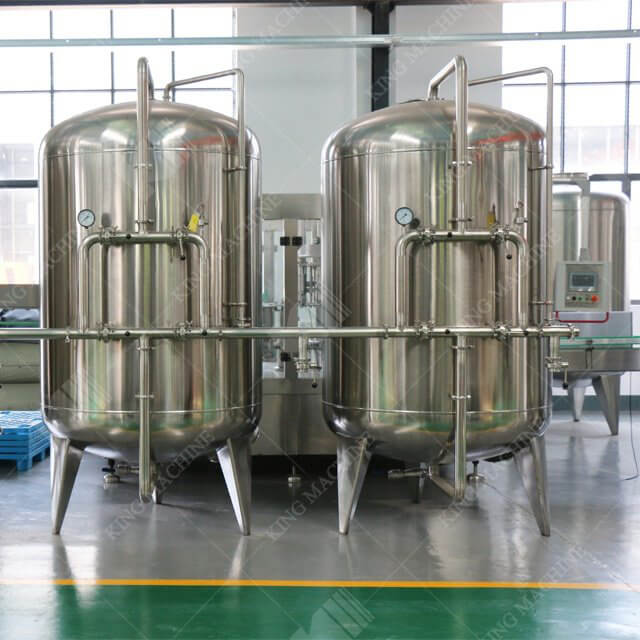
An RO system uses a high-pressure pump to push pretreated water against a semi-permeable membrane. Water molecules pass through the membrane, while most dissolved salts and other contaminants are retained and discharged with the concentrate.
Unlike conventional filtration, which mainly traps suspended particles or adsorbs certain substances, RO separates water from many dissolved impurities. The required pressure varies with feedwater salinity, system design, and operating conditions. Seawater desalination generally requires higher pressure than freshwater treatment.
2.1 Main Treatment Stages
A typical RO process includes several stages:
Stage | Main Function |
Sediment pre-filtration | Removes sand, rust, and suspended particles |
Carbon pre-filtration | Reduces chlorine and certain organic compounds |
RO membrane filtration | Separates purified water from concentrated contaminants |
Post-treatment | Adjusts water quality through additional filtration, disinfection, or mineral adjustment when required |
2.2 Process Flow
The overall process follows a straightforward sequence:
Raw water enters the pretreatment system.
Sediment and other substances that may damage the membrane are reduced.
A high-pressure pump delivers water to the RO membrane.
Permeate and concentrate are separated.
Permeate receives any necessary post-treatment before storage or distribution.
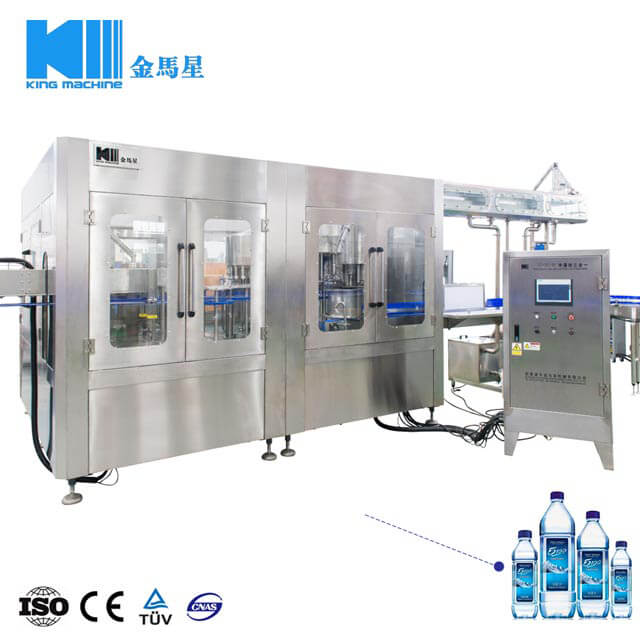
The treated water can then be supplied to a water filling machine production process according to its quality requirements.
3. What Contaminants Does RO Water Treatment Remove?
RO can reduce a wide range of dissolved substances, although actual removal rates depend on membrane specifications and operating conditions.
Dissolved salts and minerals: Reduces sodium, calcium, magnesium, and overall total dissolved solids (TDS).
Heavy metals: Can remove substantial amounts of certain metals, including lead, mercury, and some forms of arsenic.
Chemical contaminants: Reduces substances such as nitrates, fluoride, and sulfates, as well as certain organic compounds.
Microorganisms: The membrane can effectively retain many bacteria, viruses, and protozoa.
Suspended particles: These are generally removed during pretreatment.
However, RO is not a complete disinfection solution. Different contaminant forms may have different rejection rates; for example, arsenic removal depends partly on its chemical form. Water quality testing and appropriate post-treatment remain important. Therefore, a water production line should use treatment processes matched to its source water and final product requirements.
4. Where Is RO Water Treatment Used?
RO technology serves industries that require controlled water quality:
Drinking water: Reduces dissolved salts and other impurities.
Food and beverage processing: Supplies treated water for bottled water, juice, carbonated drinks, and tea production.
Pharmaceuticals and healthcare: Supports processes requiring specific water purity levels.
Industrial manufacturing: Provides process water for electronics, power generation, textiles, and other applications.
4.1 RO in Beverage Production
In beverage manufacturing, water quality affects product consistency, taste, and production reliability. RO can reduce excessive dissolved minerals and help control scaling in relevant pipes and equipment. The treated water may also undergo further adjustment to meet individual beverage formulations.
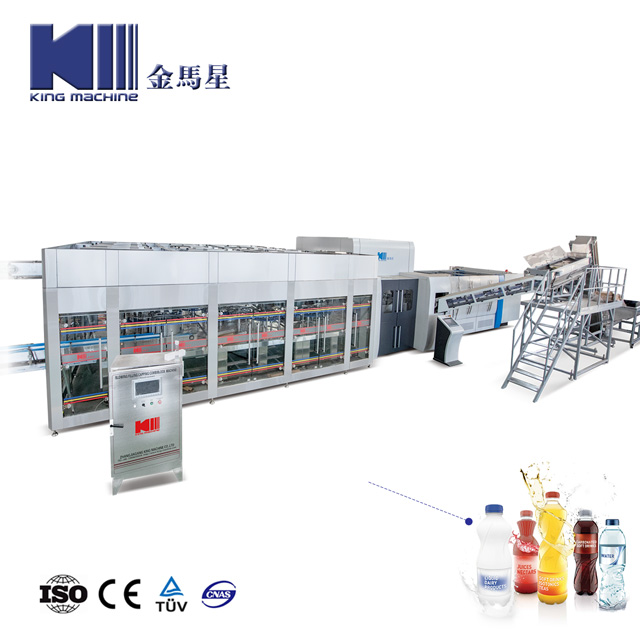
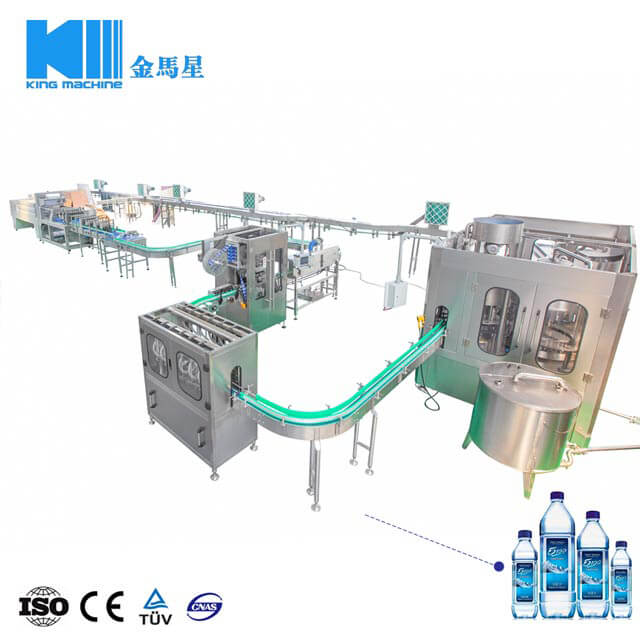
A complete blowing filling capping machine requires coordination between water treatment, storage, bottle blowing, filling, and capping. System capacity should match production demand, while pretreatment and membrane maintenance help maintain stable water quality.
Conclusion
RO water treatment uses pressure and a semi-permeable membrane to separate water from many dissolved impurities. Its effectiveness depends on suitable pretreatment, feedwater conditions, membrane performance, and any required post-treatment. Although RO offers reliable purification for many applications, concentrate disposal, energy consumption, and membrane maintenance must also be considered when designing a system.
King Machine has delivered more than 1,000 beverage filling lines to customers in over 90 countries, serving projects across different beverage sectors. If you are planning a bottled water facility or upgrading an existing production line, contact King Machine to discuss suitable water treatment integration and complete beverage production solutions.